
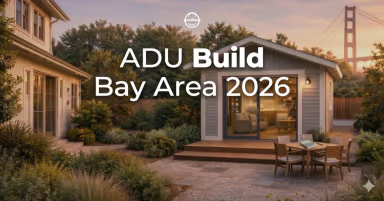
Building an ADU in the Bay Area 2026
Are you a Bay Area homeowner looking to add value to your property, generate rental income, or create space for family? Building an Accessory Dwelling Unit (ADU)—often called a granny flat, backyard cottage, or in-law unit—is one of the smartest investments you can make in California’s current real estate market.
With California’s recent legislative changes (like SB 9 and the 2024-2025 ADU streamlining laws), building an ADU in cities like San Francisco, San Jose, Oakland, and Berkeley has never been more accessible. However, navigating the local zoning laws, construction costs, and permitting process can be overwhelming.
In this comprehensive guide, we’ll break down everything you need to know about building an ADU in the Bay Area in 2026, from initial budgeting to final inspection.
What is an ADU? (And Why You Need One in the Bay Area)
An Accessory Dwelling Unit (ADU) is a secondary housing unit on a single-family residential lot. It has its own kitchen, bathroom, and sleeping area. In the Bay Area, ADUs serve three primary purposes:
- Rental Income: With some of the highest rents in the country, a studio or 1-bedroom ADU can generate $2,500–$4,500+ per month in passive income.
- Multigenerational Living: Providing a private space for aging parents or adult children while keeping them close.
- Property Value Boost: An ADU can increase your home’s resale value by 20-35%, depending on the size and quality.

2026 California ADU Laws: What Bay Area Homeowners Need to Know
California has passed several laws to "streamline" ADU production. Here are the key takeaways for 2026:
- Mandatory Approval: If your ADU is under 800 sq. ft. and meets basic height requirements, local cities must approve it (ministerial review) within 60 days.
- No Minimum Lot Size: Cities cannot require a minimum lot size to build an ADU.
- Parking Exemptions: If you are within 1/2 mile of public transit (very common in SF, Oakland, and San Jose), you are likely exempt from providing additional parking for your ADU.
- Impact Fee Waivers: ADUs under 750 sq. ft. are exempt from most impact fees, saving you thousands of dollars.

How Much Does an ADU Cost in the Bay Area (2026)?
Building in the Bay Area is more expensive than almost anywhere else in the US due to labor costs and material prices. Here is a realistic breakdown of costs for 2026:
Average ADU Costs by Type
|
ADU Type |
Size (Sq. Ft.) |
Estimated Cost Range |
Price Per Sq. Ft. |
|---|---|---|---|
|
Garage Conversion |
350 - 500 |
$120,000 - $180,000 |
$340 - $400 |
|
Detached (New Build) |
600 - 800 |
$280,000 - $450,000 |
$450 - $600 |
|
Attached (Addition) |
500 - 750 |
$200,000 - $350,000 |
$400 - $500 |
|
Junior ADU (JADU) |
< 500 |
$60,000 - $100,000 |
$150 - $250 |
Cost Breakdown (Where the Money Goes)
- Design & Permitting (10-15%): Architectural plans, structural engineering, and city permit fees.
- Site Prep & Foundation (15-20%): Grading, utility hookups (sewer, water, electric), and concrete slab.
- Shell & Framing (25-30%): Lumber, roofing, windows, and exterior doors.
- Interior Finishes (30-35%): Plumbing, electrical, HVAC, kitchen cabinets, flooring, and appliances.
- Contingency (10%): Always set aside a buffer for unexpected Bay Area soil issues or utility upgrades.

City-Specific ADU Insights: SF vs. San Jose vs. Oakland
While state law provides a baseline, each Bay Area city has its own flavor of implementation:
San Jose ADU Rules
San Jose is known as the "ADU Capital of the Bay Area." They offer Pre-Approved ADU Plans that can cut your permitting time significantly. Their "ADU Alley" initiative encourages detached units in traditional neighborhoods.
San Francisco ADU Rules
SF is more complex due to density. Most ADUs here are "conversions" of existing basements or garages (soft-story retrofits). The city has a specific ADU Handbook that homeowners must follow.
Oakland & Berkeley ADU Rules
These cities are very pro-ADU. Berkeley recently updated its zoning to allow for slightly taller ADUs (up to 18-20 feet) to accommodate "lofted" sleeping areas, which is great for small lots.

ROI Analysis: Is an ADU Worth the Investment?
Let’s look at a typical scenario for an Oakland homeowner:
- Investment: $300,000 for a 600 sq. ft. detached ADU.
- Monthly Rent: $3,000.
- Annual Income: $36,000.
- Payback Period: ~8.3 years.
- Property Value Increase: Estimated $350,000 - $400,000.
In the Bay Area, the Internal Rate of Return (IRR) for an ADU often beats the stock market, especially when you factor in the tax benefits of depreciation and the appreciation of the underlying land.

How to Start Your ADU Journey Today
- Check Your Feasibility: Measure your backyard and check for easements or power lines.
- Set a Realistic Budget: Don't forget to include a 10-15% contingency.
- Get Professional Plans: Hire an architect or use a reputable ADU design-build firm.
- Find a Vetted Contractor: This is the most critical step. You need someone experienced with Bay Area codes and ADU-specific construction.
Ready to build? At IA Remodelings, we connect Bay Area homeowners with licensed, vetted contractors who specialize in ADU construction.
👉 Get a Free ADU Consultation & Quote Today
Want a specific estimate for your ADU in Bay Area?
Tell our agent about your project — it'll match you with a verified local pro in minutes.

Comments