

How to Know If Your Bay Area Roof Needs Repair or Full Replacement in 2026
Typical roof replacement costs in the Bay Area range from $7,500 to $60,000, and the decision between a repair and a full replacement can mean a $15,000 to $40,000 difference in project cost. Getting that call right requires understanding your roof's actual condition — not just the contractor's recommendation. Bay Area roofs face specific stressors that accelerate deterioration: coastal fog moisture, salt air in waterfront neighborhoods, significant temperature swings between inland and coastal microclimates, and wildfire ember risk across most of the region.
At a Glance: Roof in the Bay Area 2026
|
|
|
|---|---|
|
Average cost |
$7,500 – $60,000 |
|
Cost per sq ft |
$4.50 – $25 |
|
ROI at resale |
60–70% |
|
Typical timeline |
1–5 days for replacement |
|
Permit required |
Yes / Depends on scope |
|
Local market factor |
~1.40x national baseline |
How Much Does a Roof Cost in the Bay Area in 2026?
Labor costs in the Bay Area run approximately 1.40x the national baseline, which is why Bay Area roofing costs land well above national averages. The table below reflects local market pricing.
|
Roofing material |
Total installed cost |
Cost per sq ft |
Typical lifespan |
|---|---|---|---|
|
Asphalt shingles (3-tab) |
$7,500–$14,000 |
$4.50–$7.00 |
15–20 years |
|
Architectural shingles |
$10,000–$20,000 |
$6.00–$10.00 |
25–30 years |
|
Metal (standing seam) |
$20,000–$50,000 |
$12.00–$25.00 |
40–70 years |
|
Tile (concrete or clay) |
$25,000–$60,000 |
$15.00–$25.00 |
50+ years |
Additional cost line items to budget for: tear-off of the old roof ($1,500–$3,500), decking repair if needed ($3.00–$6.00/sq ft), and gutter replacement ($2,000–$5,000 if required). These are not always included in the base estimate — confirm with your contractor what the quote covers.
Bay Area-Specific Roof Stressors
The Bay Area's climate creates wear patterns that differ from most of the country:
Fog moisture: coastal fog cycles — particularly in San Francisco, Daly City, Half Moon Bay, and parts of the East Bay — keep roofing materials damp for extended periods. This promotes moss and algae growth that, if untreated, works into shingle layers and accelerates granule loss. Fog-zone roofs typically age faster than their rated lifespan.
Temperature swings: the Bay Area's microclimates create unusual expansion and contraction stress. A roof in Walnut Creek can experience 40°F temperature variation in a single day during certain seasons. That thermal cycling degrades sealants around flashing, ridgelines, and penetrations faster than stable-climate markets.
Wildfire ember risk: most of the Bay Area's hillside communities — Oakland Hills, Orinda, Moraga, Marin County, and parts of Santa Clara County — are designated Very High Fire Hazard Severity Zones by CAL FIRE. In those zones, Class A roofing material is required by California Building Code. If your current roof does not meet Class A standards (most asphalt 3-tab shingles do not), replacement with Class A material — architectural shingles, metal, or tile — addresses both the code requirement and long-term fire protection.
Salt air: properties within 1–2 miles of the bay or ocean experience accelerated corrosion on metal flashing, fasteners, and trim. This is less about shingle wear and more about the metal components — flashing failures in salt-air zones are the most common source of active leaks.
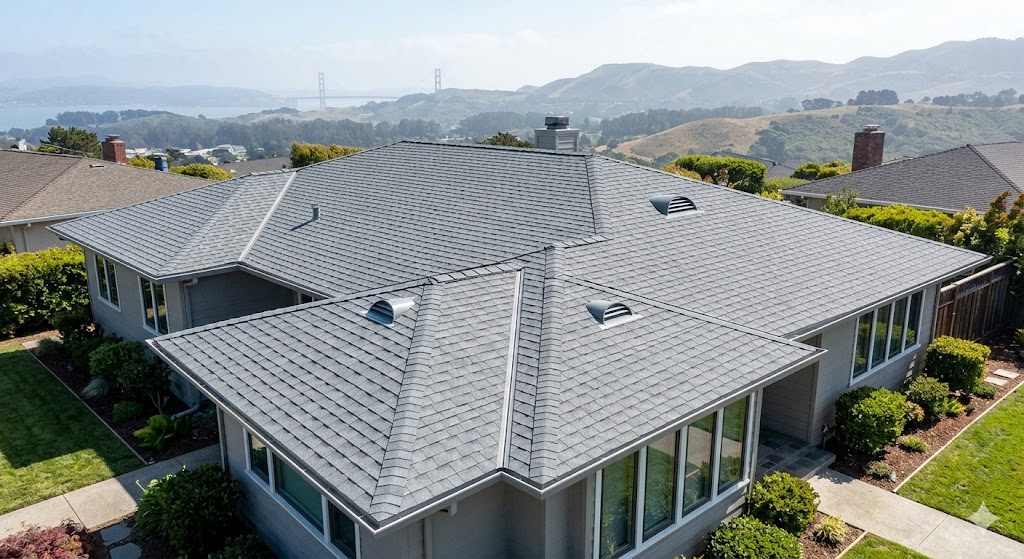
The 5 Signs That Clearly Mean Full Replacement
Not every roof issue requires full replacement. These five signals indicate it does:
- Age over 20 years: asphalt shingles in fog-zone Bay Area conditions typically reach functional end-of-life at 20–25 years, shorter than the rated lifespan. If the roof is in that range and showing any additional issues, replacement is almost always more cost-effective than layering repairs.
- Multiple active leaks in different areas: isolated leaks can be repaired. Leaks appearing in separate locations — different valleys, different penetrations, different corners — indicate systemic shingle or underlayment failure, not isolated damage.
- Structural or deck damage: if the roof deck (the plywood or OSB sheathing underneath the shingles) shows soft spots, rot, or delamination, replacement is required — deck repairs need to happen regardless, and doing them under a repaired rather than new roof compounds future cost.
- Widespread granule loss: asphalt shingles shed granules as they age. If granule buildup is visible in gutters and downspout splash areas across the roof's surface (not just one slope), the shingles have lost significant UV and impact protection and are in terminal decline.
- Moss or algae penetration into the shingle layer: surface moss can sometimes be treated. When organisms have worked under shingles and into the mat, the structural bond is compromised and patching accelerates adjacent damage.
Signs That Repairs Are Sufficient
Repair is the right call when damage is isolated and the roof's overall structure is sound:
- Single leak from failed flashing: flashing around chimneys, vents, skylights, and valleys is the most common repair source — these can be replaced or resealed without touching the surrounding shingles
- Storm damage to one slope or section: wind or debris damage to a defined area on an otherwise sound roof warrants section replacement, not full replacement
- A few missing or lifted shingles: isolated shingle damage on a roof under 15 years old with good granule coverage is a repair, not a replacement
The Repair vs. Replacement Decision Framework
|
Factor |
Lean toward repair |
Lean toward replacement |
|---|---|---|
|
Roof age |
Under 15 years |
Over 20 years |
|
Damage scope |
Isolated (<25% of surface) |
Widespread (>30% of surface) |
|
Repair cost vs. replacement |
Under 25% of replacement cost |
Over 40% of replacement cost |
|
Deck/structural condition |
Sound throughout |
Rot or soft spots detected |
|
Number of leak locations |
One area |
Multiple separate areas |
|
Selling within 2 years |
No |
Yes — new roof eliminates inspection renegotiation |
|
Fire zone compliance |
Already Class A rated |
Non-compliant in designated VHFHSZ |
The rule of thumb: if a repair costs more than 30–40% of what a replacement would cost on a roof over 15 years old, you are paying repair cost now and replacement cost later. The replacement math usually wins.
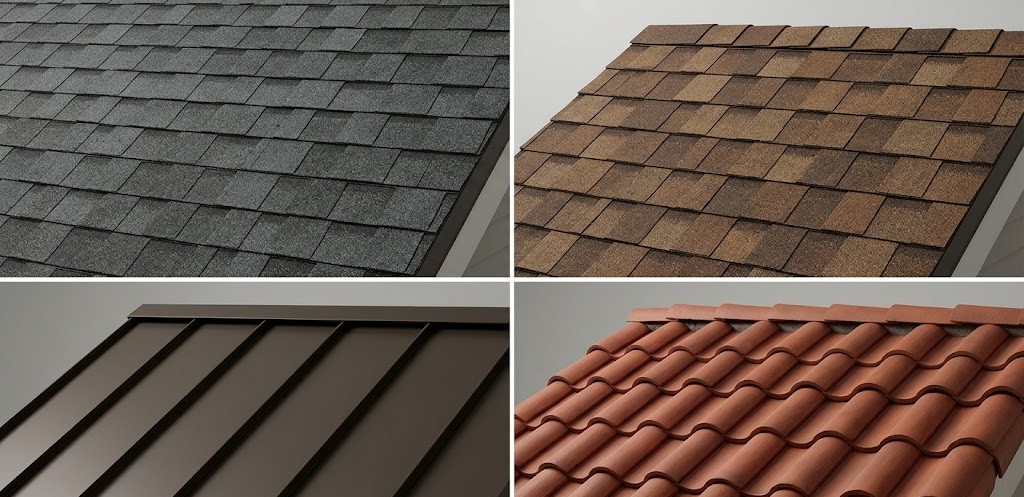
Roofing Materials for the Bay Area: What to Choose
Architectural shingles are the most common replacement choice for non-fire-zone lots: Class A rated, 25–30 year warranted, and $10,000–$20,000 installed. They handle fog moisture better than 3-tab shingles and come in algae-resistant formulations relevant to coastal areas.
Metal (standing seam) is the strongest long-term value on hillside or fire-zone properties — 40–70 year lifespan, Class A by default, and no granule degradation in fog conditions. Higher upfront ($20,000–$50,000) but typically the last roof a homeowner will need.
Tile (concrete or clay) is appropriate for homes where the structural load allows it — tile is heavy and older Bay Area homes may require framing assessment before installation. Extremely durable and Class A rated, but the $25,000–$60,000 cost range makes it a premium-tier decision.
Insurance: When to File a Claim vs. Pay Out of Pocket
If roof damage results from a covered event — wind storm, falling tree limb, hail — filing a homeowner's insurance claim is reasonable. Bay Area-specific note: damage from fog-driven moisture and gradual algae growth is almost always classified as wear and tear, not a covered event. Filing a claim for wear-and-tear damage risks denial plus a premium increase for the attempt.
When filing is appropriate: storm event with documented date, visible sudden damage consistent with that event, and repair cost above your deductible. When paying out of pocket is better: gradual deterioration, pre-existing conditions, or total repair cost close to your deductible amount.
How to Get a Second Opinion Without Hiring the Wrong Contractor
Get at least two independent estimates — not from contractors who offer "free inspections" attached to a sales pitch, but from licensed roofing contractors who will provide a written scope of work. Verify each contractor's CSLB license at cslb.ca.gov before any work begins. A legitimate contractor will show you the actual problem — photographs of the deck, flashing, or shingles — not just a verbal recommendation. If a contractor recommends replacement and cannot show you why on the roof itself, get a second opinion before committing.
The Bottom Line
For Bay Area homeowners in 2026, the repair vs. replacement call comes down to three variables: roof age, the scope of damage across the surface, and the ratio of repair cost to replacement cost. A roof under 15 years old with isolated damage warrants repair. A roof over 20 years old with multiple issues warrants replacement — even if the immediate problem seems manageable. The risk in between is hiring a contractor whose incentive is to recommend the higher-cost option regardless of your actual situation. IA Remodelings connects Bay Area homeowners with vetted, licensed roofing contractors who provide honest condition assessments, written estimates that break out materials and labor, and documented warranties — so the recommendation you receive reflects your roof's actual condition.
Want a specific estimate for your roof in Bay Area?
Tell our agent about your project — it'll match you with a verified local pro in minutes.


Comments