
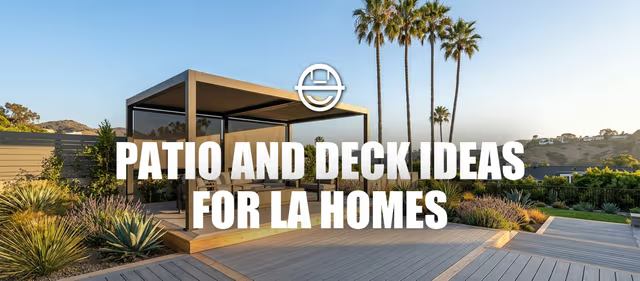
Patio and Deck Ideas for Los Angeles Homes: What to Build, What It Costs, and What Adds Value in 2026
Building a deck or patio in Los Angeles costs between $6,000 for a small ground-level wood deck and $85,000+ for a multi-level custom build with an outdoor kitchen. Because LA's climate makes outdoor space usable 10–11 months of the year, well-executed outdoor projects deliver some of the strongest returns of any home improvement in this market. The key decisions — material, permit scope, fire zone compliance, and HOA rules — determine both final cost and long-term durability.
At a Glance: Decks and Patios in LA 2026
|
|
|
|---|---|
|
Average cost |
$6,000–$85,000+ |
|
Cost per sq ft |
$25–$200 (varies by type and material) |
|
ROI at resale |
65–80% (higher for covered and kitchen additions) |
|
Typical timeline |
1–4 weeks for most projects |
|
Permit required |
Yes for attached and elevated decks; varies for ground-level patios |
|
Local market factor |
~1.35x national baseline |
How Much Does a Deck or Patio Cost in Los Angeles in 2026?
Labor in Los Angeles runs approximately 1.35x the national baseline, which pushes deck and patio costs above what national cost guides show. The table below reflects LA-market pricing — not national averages.
|
Project type |
Cost range |
Cost per sq ft |
Notes |
|---|---|---|---|
|
Ground-level wood deck (pressure-treated) |
$6,000–$20,000 |
$25–$55 |
Most affordable; not Class A fire-rated |
|
Cedar or redwood deck |
$12,000–$32,000 |
$45–$85 |
Natural aesthetic; moderate fire resistance |
|
Composite deck (Trex, Fiberon, TimberTech) |
$18,000–$45,000 |
$65–$110 |
Low maintenance; most composite brands are Class A fire-rated |
|
Concrete patio (basic) |
$5,000–$18,000 |
$15–$45 |
Durable and low maintenance; ideal for flat, accessible lots |
|
Stamped or decorative concrete patio |
$12,000–$35,000 |
$35–$80 |
High visual impact; popular in hillside and mid-century homes |
|
Multi-level or custom deck |
$35,000–$85,000+ |
$100–$200 |
Hillside lots, complex framing, or full outdoor living build-outs |
Key cost drivers in LA: site access and slope (hillside lots add $5,000–$20,000 in structural cost), utility and irrigation rerouting, and fire zone material requirements. An on-site assessment before finalizing design prevents budget surprises after permitting begins.
Get Your Free Deck or Patio Estimate →

Wood vs. Composite vs. Concrete: What Works in the LA Climate
All three materials perform well in Los Angeles's dry climate, but each has trade-offs that matter specifically in this market:
Pressure-treated wood is the lowest entry cost but requires sealing every 2–3 years and is not Class A fire-rated — a material disqualifier in high fire hazard zones. Best suited for non-fire-zone lots where budget is the primary constraint.
Cedar and redwood offer a premium natural look with better natural fire resistance than pressure-treated pine, though neither qualifies as Class A on its own. In LA's UV-heavy climate, both need periodic staining to prevent graying and checking.
Composite decking (Trex, Fiberon, TimberTech) dominates mid-to-high-end new builds in LA for good reason: it requires no sealing, resists UV fading, and most brands carry a Class A fire rating from ICC or ASTM E108. Higher upfront cost is offset by near-zero maintenance over a 25-year product lifespan.
Concrete patios suit flat lots and modern or mid-century homes where a hard, level surface is the goal. Stamped concrete with integral color holds up extremely well in LA's dry heat and is a strong choice for pool surrounds, dining areas, and courtyard-style patios. Concrete does not crack from freeze-thaw cycles in LA, which is its primary vulnerability in colder climates.
When a Permit Is Required in Los Angeles
LADBS (Los Angeles Department of Building and Safety) requires a building permit for most deck construction. The thresholds:
- Attached decks (connected to the primary residence): permit required regardless of height
- Elevated decks (floor more than 30 inches above grade): permit required
- Ground-level detached patios (concrete slabs, paver patios): generally no permit required if under 200 sq ft and not in a setback
- Shade structures and pergolas attached to the house: permit required
Permit fees are based on project valuation — a $25,000 composite deck project typically generates $800–$2,000 in permit fees at LADBS. Plan check processing currently runs 4–6 weeks for standard residential deck projects. An experienced contractor who has pulled permits with LADBS recently will know which correction requests to anticipate and how to format plans to minimize back-and-forth.
HOA Restrictions in LA Neighborhoods — What to Check Before You Design
Los Angeles has many planned communities and condo developments with active HOAs that control exterior modifications — including decks, patios, and shade structures. Common HOA requirements in LA neighborhoods include:
- Material and color approval: HOAs in communities like Playa Vista, Porter Ranch, and parts of Woodland Hills often require that deck materials and stain colors match a pre-approved palette
- Height and setback limits: some HOAs impose stricter setbacks from property lines than LADBS, and may limit deck height even on lots where LADBS would allow more
- Footprint maximums: certain CC&Rs cap the percentage of the backyard that can be covered or hardscaped
- Approval process timing: most LA HOA architectural review processes take 30–60 days, and approval is required before any permit application can proceed
Pull and review the CC&Rs before committing to a design. A deck plan that gets denied by the HOA after engineering drawings are complete wastes $2,000–$5,000 in design fees. Your contractor should confirm HOA requirements are cleared before pulling a permit.
.webp)
Fire Safety in SoCal Fire Zones: Materials and Code Requirements
A significant portion of Los Angeles — particularly hillside neighborhoods in the Santa Monica Mountains, Pacific Palisades, Topanga, Altadena, Studio City hills, and parts of Brentwood — falls within California's Very High Fire Hazard Severity Zone (VHFHSZ). Building in a VHFHSZ triggers requirements under California's WUI (Wildland-Urban Interface) building code:
- Decking material must be Class A fire-rated — this eliminates untreated pressure-treated pine and most natural wood options without a fire-retardant treatment applied on site
- Composite decking from major brands (Trex Transcend, TimberTech PRO, Fiberon Horizon) generally qualifies as Class A under ASTM E108 — verify the specific product's classification before purchase
- Under-deck construction must use ignition-resistant materials to prevent ember accumulation and ignition from below
- Vegetation clearance within 30 feet of the deck must comply with CAL FIRE defensible space requirements — a separate compliance step before final inspection
To verify whether your property is in a VHFHSZ, use CAL FIRE's fire hazard mapping tool. Properties in designated zones that use non-compliant materials will fail inspection.
Deck Additions That Add Resale Value in LA
In a market where buyers treat outdoor space as year-round living space, certain additions consistently recoup investment at resale:
Covered pergola or patio cover: the single highest-ROI addition in LA. Buyers pay a premium for shaded outdoor dining and seating — shade structures added over an existing deck or concrete patio cost $8,000–$25,000 and routinely appraise above their construction cost in desirable neighborhoods.
Outdoor kitchen: ranges from a basic built-in grill station with counter space ($10,000–$18,000) to a full kitchen with sink, refrigerator, and pizza oven ($25,000–$45,000). High-end buyers in West LA, Silver Lake, and the hills neighborhoods expect outdoor kitchens in the $1.5M+ price range. At lower price points, a well-executed basic kitchen station adds more value than its cost.
Built-in seating and planters: $3,000–$8,000 and adds visual completeness to a deck — buyers see a finished space rather than empty square footage.
LED lighting (deck, string, and path): $1,500–$4,000 and makes the outdoor space functional after dark — a practical requirement for evening entertaining that buyers notice immediately during showings.
The Bottom Line
For LA homeowners in 2026, the most value-efficient path is a composite deck or concrete patio matched to the property's fire zone status: composite in VHFHSZ lots where Class A materials are required, concrete for flat lots where hardscape suits the design. A covered pergola and basic outdoor lighting added at the same time as the deck consistently deliver the best combined ROI. Custom multi-level builds and full outdoor kitchens are justified in neighborhoods where the comparable sale data supports the spend — and in LA's higher-end markets, they often do.
IA Remodelings works with licensed, LADBS-experienced deck and patio contractors in Los Angeles who know fire zone requirements, handle permit submission, and carry the liability coverage that protects your investment throughout the project.
Want a specific estimate for your decks in Los Angeles?
Tell our agent about your project — it'll match you with a verified local pro in minutes.
Comments