

A Comprehensive Guide to Roofing in LA: Costs, Materials, and Best Practices for 2026
Planning a roofing project in LA? Understanding 2026 costs and best practices helps you budget properly and avoid surprises. This guide breaks down typical pricing for different roofing materials and provides expert tips for homeowners.
At a Glance: Roofing in LA 2026
|
|
|
|---|---|
|
Average cost |
$7,500 – $60,000 |
|
Cost per sq ft |
$4.50 – $25 |
|
ROI at resale |
60–70% |
|
Typical timeline |
1–5 days |
|
Permit required |
Yes / Depends on scope |
|
Local market factor |
1.00x |
How Much Does a Roof Cost in LA in 2026?
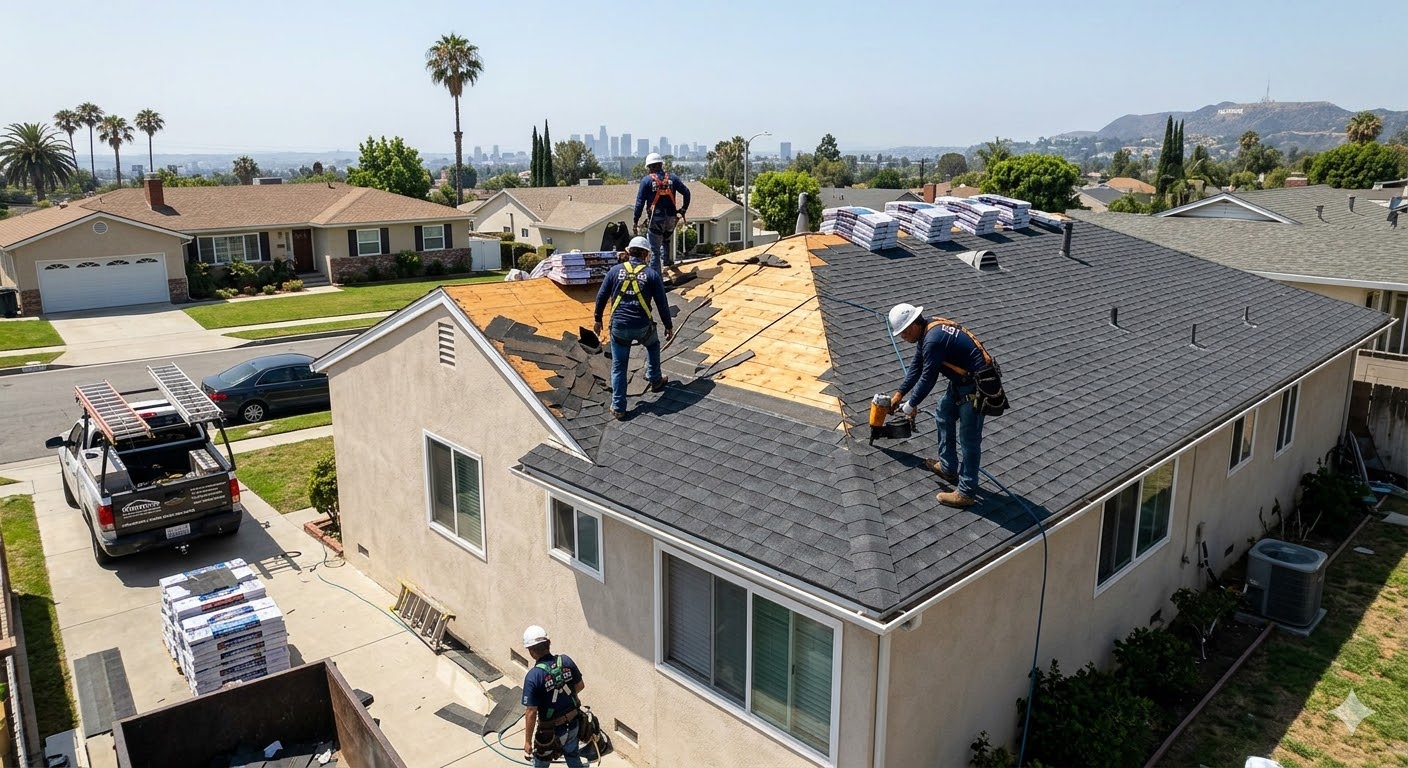
Roofing costs in LA vary widely based on material, size, and complexity. Asphalt shingles (3-tab) cost between $7,500 and $14,000 for a 1,500–2,000 sq ft roof, while architectural shingles cost between $10,000 and $20,000. Metal roofs (standing seam) range from $20,000 to $50,000, and tile roofs (concrete/clay) cost between $25,000 and $60,000. Flat roofs (TPO/EPDM) cost between $8,000 and $22,000.
Cost Comparison Table
|
Material |
Cost Range |
Cost per Sq. Ft. |
|---|---|---|
|
Asphalt Shingles (3-tab) |
$7,500 – $14,000 |
$4.50 – $7.00 |
|
Architectural Shingles |
$10,000 – $20,000 |
$5.00 – $10.00 |
|
Metal Roof (Standing Seam) |
$20,000 – $50,000 |
$10.00 – $25.00 |
|
Tile Roof (Concrete/Clay) |
$25,000 – $60,000 |
$12.50 – $30.00 |
|
Flat Roof (TPO/EPDM) |
$8,000 – $22,000 |
$4.00 – $11.00 |
Key cost factors: Material (50–60%), labor (30–40%), and tear-off of old roof (10–20%). According to IA Remodelings Market Research 2026, the average cost per square foot for roofing in LA is between $4.50 and $25.00.
Choosing the Right Roofing Material for Your LA Home
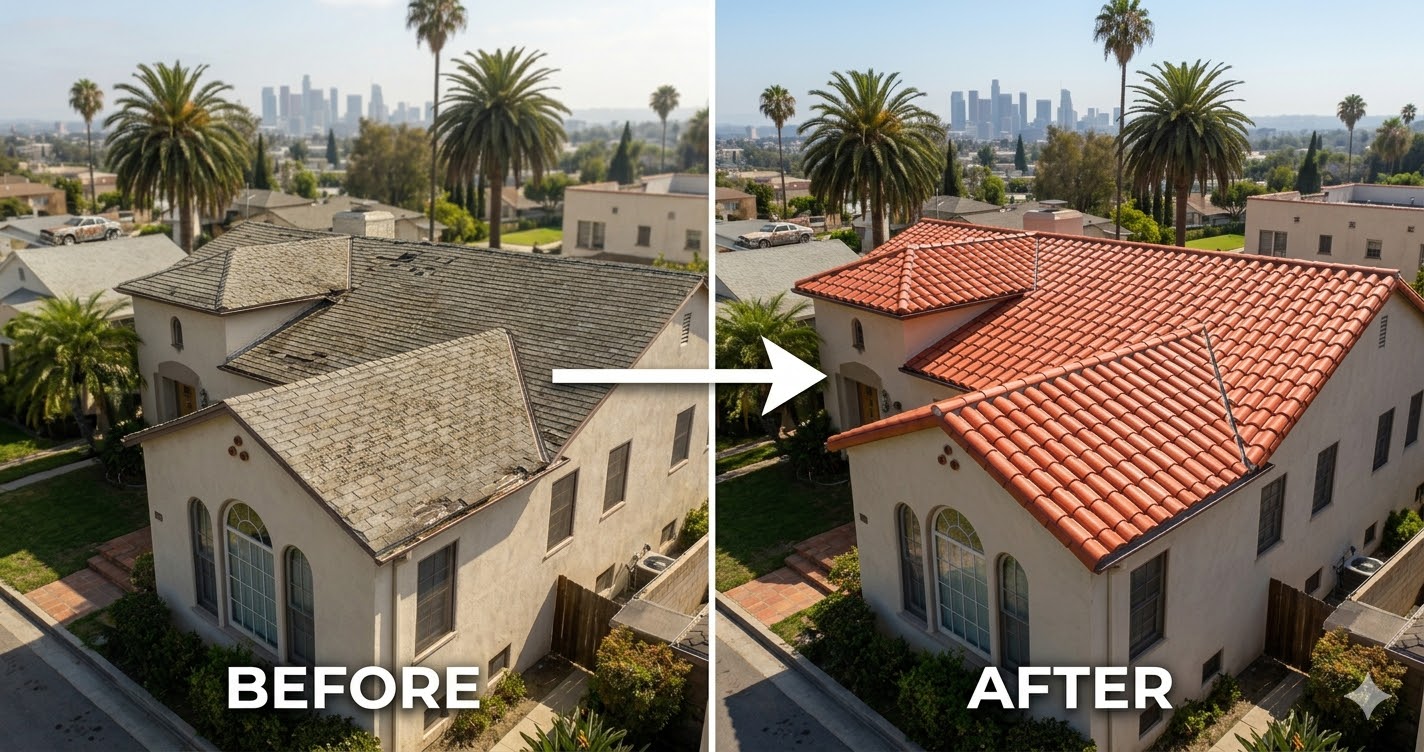
When selecting a roofing material, consider factors like durability, maintenance, and aesthetic appeal. Asphalt shingles are a popular choice for their affordability and ease of installation, while metal roofs offer superior durability and energy efficiency. Tile roofs provide a unique, stylish look, but can be heavy and require additional structural support.
Material Comparison Table
|
Material |
Durability |
Maintenance |
Aesthetic Appeal |
|---|---|---|---|
|
Asphalt Shingles |
20–30 years |
Low |
Classic, versatile |
|
Metal Roof |
40–70 years |
Low |
Modern, sleek |
|
Tile Roof |
50–100 years |
Medium |
Unique, stylish |
|
Flat Roof |
20–30 years |
High |
Functional, modern |
Expert tip: Consider factors like climate, neighborhood restrictions, and personal preference when choosing a roofing material. According to the NAHB Remodeling Market Index, the ROI for roofing projects in LA is around 61.1%.
LA Storm Types and Roof Damage
LA is prone to various storm types, including Pineapple Express and Santa Ana wind events, which can cause significant roof damage. Insurance typically covers roof replacement for storm-related damage, but may not cover maintenance-related issues. According to IA Remodelings Market Research 2026, it's essential to document damage immediately and contact your insurer to open a claim.
Step-by-Step Guide to Filing a Roof Insurance Claim in LA
- Document damage immediately: Take photos, videos, and notes, including timestamps.
- Call your insurer and open a claim: Provide detailed information about the damage and your policy.
- Get a contractor inspection and written estimate: Choose a licensed, insured contractor to assess the damage and provide a detailed estimate.
- Schedule an adjuster visit: The insurance adjuster will inspect the damage and provide a settlement offer.
- Negotiate if necessary: If the offer is low, negotiate with the adjuster to ensure a fair settlement.
Common mistakes that kill claims: Failing to document damage, not contacting the insurer promptly, and not getting a written estimate from a licensed contractor.
Want a specific estimate for your roof in Los Angeles?
Tell our agent about your project — it'll match you with a verified local pro in minutes.


Comments