
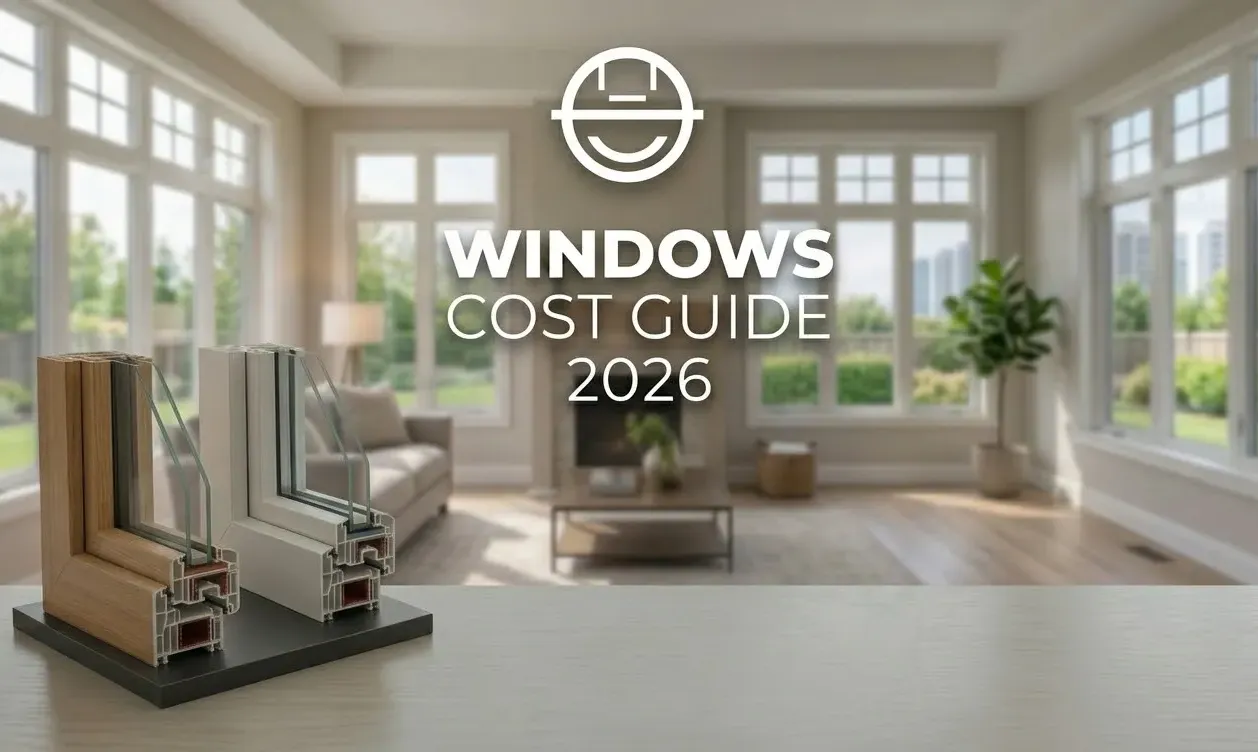
Window Replacement Cost Guide 2026
How Much Does Window Replacement Cost in 2026?
The average cost to replace a single window in 2026 is approximately $750, with most homeowners paying between $300 and $1,200 per window depending on frame material, glass type, window style, and installation complexity. For premium options like large bay windows or custom wood frames, costs can reach $2,500 or more per unit.
For a whole-home project — typically 10 to 20 windows — total costs commonly fall between $7,500 and $20,000. Replacing all windows at once usually qualifies for volume discounts of 10–18% per window, and it ensures consistency in style, color, and performance across your entire home.
Labor runs $100 to $300 per window for standard installations. Complex jobs — upper-floor replacements, structural modifications, or historic homes requiring specialty materials — can push labor to $600 or more per unit.
Quick benchmark: For a typical 3-bedroom home with 10–15 standard vinyl double-hung windows, budget approximately $7,500–$12,000 for the full project with professional installation.
Cost by Frame Material
The frame material you choose affects price, durability, maintenance requirements, and energy performance. Here's how the most popular options compare:
|
Frame Material |
Cost per Window (Installed) |
Lifespan |
Maintenance |
Best For |
|---|---|---|---|---|
|
Vinyl |
$300 – $900 |
20–30 years |
Very low |
Budget-friendly, low-maintenance |
|
Aluminum |
$250 – $750 |
20–30 years |
Low |
Modern aesthetics, coastal areas |
|
Wood |
$600 – $1,800 |
30–50+ years |
High |
Classic appearance, historic homes |
|
Clad Wood |
$800 – $2,800 |
30–50+ years |
Low (exterior) |
Wood interior look with weather protection |
|
Fiberglass |
$700 – $1,500 |
30–50 years |
Very low |
Maximum durability and energy efficiency |
|
Composite |
$600 – $1,500 |
30–40 years |
Very low |
Wood-like appearance without the upkeep |
Vinyl is the most popular choice in the United States, and for good reason. It's affordable, requires almost no maintenance, and delivers solid thermal performance. Modern vinyl frames come in a wide range of colors and finishes that look significantly better than the basic white options of years past.
Fiberglass is the premium performance pick. It expands and contracts at nearly the same rate as glass, which preserves the seal over decades. Fiberglass frames are stronger and thinner than vinyl, allowing for more glass area in the same opening — meaning more natural light.
Wood remains the gold standard for aesthetics, particularly in traditional and historic homes. The tradeoff is maintenance: wood frames require periodic painting or staining and are susceptible to moisture damage if neglected. Clad wood windows solve this by wrapping the exterior in aluminum or fiberglass while keeping the warm wood look on the inside.
Cost by Window Style
Window style affects both price and functionality. Some styles provide better ventilation, while others maximize views or natural light:
|
Window Style |
Cost per Window (Installed) |
Key Features |
|---|---|---|
|
Single-Hung |
$200 – $600 |
Only the bottom sash moves; most affordable option |
|
Double-Hung |
$300 – $850 |
Both sashes move; easy to clean with tilt-in design |
|
Casement |
$350 – $1,000 |
Hinged on the side, cranks open; excellent ventilation and seal |
|
Sliding |
$250 – $800 |
Slides horizontally; great for wide openings |
|
Awning |
$400 – $1,000 |
Hinged at top, opens outward; allows ventilation during rain |
|
Picture |
$250 – $850 |
Fixed, non-opening; maximum light and unobstructed views |
|
Bay / Bow |
$1,500 – $4,500 |
Projects outward; adds interior space and architectural interest |
|
Garden |
$1,000 – $3,500 |
Small box-style projection; popular for kitchens |
|
Egress |
$800 – $2,500 |
Code-compliant for basement bedrooms; safety requirement |
Double-hung windows are the most popular style nationwide. They're versatile, work well in nearly any room, and modern tilt-in sashes make cleaning easy — even on upper floors. Casement windows offer the tightest seal when closed, making them an excellent choice for energy efficiency and areas exposed to wind-driven rain.

Glass Options and Their Impact on Cost
The glass package you choose can significantly affect both the upfront cost and long-term energy savings of your new windows.
Double-pane (insulated glass) is now the standard minimum. Two layers of glass with an air or gas-filled gap between them provide substantially better insulation than single-pane windows. Most double-pane windows come standard with argon gas fill, which improves thermal performance at minimal additional cost.
Triple-pane glass adds a third layer and a second insulating gap. It's the top tier for energy efficiency and noise reduction, but adds $50–$150 per window to the cost. Triple-pane is most cost-effective in extreme climates — very cold northern regions or areas with intense summer heat — where the energy savings offset the upfront premium within 5–7 years.
Low-E coatings (low-emissivity) are thin metallic layers applied to the glass that reflect heat while allowing light through. Most energy-efficient windows include Low-E coating as standard, but upgraded versions are available for homes in very hot or very cold climates.
Impact-rated glass is a requirement in hurricane-prone coastal areas and adds $100–$400 per window. Laminated safety glass and reinforced frames protect against wind-borne debris and also provide excellent noise reduction and security benefits even in non-hurricane regions.
Where Your Window Replacement Budget Goes
For a typical whole-home window replacement project, here's how costs break down:
Windows/materials: 50–60% — This covers the window units themselves plus any trim, casing, and hardware. Material grade and glass package are the biggest variables.
Labor/installation: 30–40% — Professional installers typically charge $100–$300 per window. Complex installations (upper floors, structural changes, bay/bow windows) cost more. Expect to pay on the higher end in metropolitan areas.
Disposal and cleanup: 3–5% — Removing and hauling away old windows and trim. Some contractors include this in their base price; others charge separately.
Permits and extras: 2–5% — Permit fees average $50–$300 depending on your municipality. Structural modifications, additional insulation, or interior trim upgrades are common add-ons.
Pro Tip: Replacing all your windows at once gives you better negotiating leverage — contractors are more willing to discount per-unit pricing on larger projects. Booking during the off-season (late fall or winter) can also help secure better rates and faster scheduling.
Full-Frame vs. Retrofit: Which Installation Do You Need?
This is one of the most important decisions in a window replacement project, and it directly affects both cost and long-term performance.
Retrofit (insert) installation keeps the existing window frame in place and fits a new window unit inside it. It's faster, less disruptive, and cheaper — typically saving $100–$200 per window compared to full-frame. However, the new window is slightly smaller than the original opening, which means a marginal reduction in glass area. Retrofit works well when the existing frames are structurally sound and in good condition.
Full-frame replacement removes everything — the window, frame, trim, and sometimes surrounding siding — down to the rough opening. This allows the installer to inspect for hidden damage (rot, water infiltration, insulation gaps), correct any issues, and install a perfectly fitted new unit. It costs more and takes longer, but delivers the best seal, maximum glass area, and longest service life. Full-frame is the right choice when existing frames show signs of damage, when you're changing window sizes or styles, or when you want the best possible result.

Energy Efficiency: The Payback You Can Measure
New windows are one of the few home improvements where you can quantify the ongoing financial return. According to the U.S. Department of Energy, heat gain and loss through windows account for 25–30% of residential heating and cooling energy use. Replacing old single-pane windows with Energy Star-rated double-pane units can reduce energy bills by approximately 12–13% — and in some cases more.
For a household spending $2,400 per year on heating and cooling, that's roughly $300 per year in savings. Over a 20-year window lifespan, cumulative savings can exceed $6,000 — which offsets a meaningful portion of the initial investment.
Triple-pane windows with premium Low-E coatings and gas fills push those savings even higher, particularly in climates with extreme temperature swings. Some homeowners in northern states report heating bill reductions of 20% or more after upgrading from original single-pane windows.
Beyond utility bills, energy-efficient windows improve comfort in ways that don't show up on a spreadsheet: fewer drafts near seating areas, more consistent room temperatures, less condensation on glass in winter, and reduced strain on HVAC systems — which can extend the life of your furnace and air conditioner.
Return on Investment: What New Windows Add to Your Home
Window replacement consistently ranks among the top home improvement projects for resale value. According to the 2025 Cost vs. Value Report, homeowners recover approximately 65–76% of their window investment when they sell — with vinyl windows recouping around 76% and wood windows around 70%.
In dollar terms, a whole-home window replacement can add $8,000 to $18,000 to a home's resale value depending on the number of windows, materials used, and local market conditions. In competitive housing markets, updated windows can also accelerate the sale timeline and reduce buyer negotiation.
The full financial picture looks even better when you include ongoing energy savings. Over a 10-year ownership period, a $12,000 window project that adds $9,000 in resale value and saves $3,000 in energy costs has essentially paid for itself.
Beyond the numbers, new windows improve curb appeal, reduce outside noise, enhance security with modern locking mechanisms, and eliminate the ongoing hassle of maintaining aged frames that stick, leak, or fog up.
Signs It's Time to Replace Your Windows
Not sure if your windows need replacing or just a tune-up? Here are the most common indicators that replacement is the better path:
Visible deterioration — Warped frames, rotting wood, cracked glazing, or significant paint peeling that keeps recurring despite maintenance. These are structural issues that repair can't fully resolve.
Foggy or condensation between panes — When moisture appears between the glass layers of a double-pane window, the seal has failed. The insulating gas has escaped and the window's thermal performance is significantly compromised.
Drafts and temperature inconsistency — If you feel cold air near closed windows in winter, or certain rooms are always harder to heat or cool, your windows are likely underperforming. Hold a lit candle near window edges on a windy day — if the flame flickers significantly, air is getting through.
Difficulty opening, closing, or locking — Windows that stick, won't stay open, or can't be locked properly are both a comfort issue and a security concern. In many cases, the underlying frame distortion means replacement is more practical than repair.
Single-pane glass — If your home still has original single-pane windows, upgrading to double or triple-pane is one of the most impactful energy improvements you can make. The difference in comfort and utility costs is dramatic.
High energy bills with no clear cause — If your HVAC system is in good condition but heating and cooling costs keep climbing, underperforming windows are a likely culprit. An energy audit (typically $200–$400) can confirm whether your windows are the weak link.
How to Budget and Plan Your Window Replacement
1. Count your windows and assess their condition. Walk through every room and note which windows need replacement versus which might last several more years. If most windows are the same age, replacing them all at once is usually more cost-effective.
2. Decide on your priorities. Are you focused on energy savings, noise reduction, curb appeal, or preparing to sell? Your primary goal should guide your material and glass choices. Homeowners planning to sell within 1–2 years often get the best ROI from standard vinyl double-hung windows — the most universally appealing option.
3. Choose between retrofit and full-frame. If your existing frames are solid, retrofit saves money. If you see any signs of rot, water damage, or frame distortion, full-frame replacement is the smarter long-term investment.
4. Get at least three written quotes. Ask each contractor to specify the window brand, model, glass package, installation type, warranty details, and whether the quote includes disposal, trim, and permits. Compare apples to apples.
5. Verify contractor credentials. Ensure your installer is licensed, insured, and certified by the window manufacturer. Manufacturer certifications matter because they enable extended warranties — and improper installation is the most common reason for warranty claims being denied.
6. Factor in the full timeline. Custom and specialty windows can take 8–16 weeks from order to delivery. If you're planning a project for spring or summer, start the process in late winter. Standard vinyl replacement windows typically have shorter lead times.
7. Look into available incentives. Check your state's DSIRE database for energy efficiency rebates, and ask your utility company about per-window rebates for Energy Star-rated products. These incentives can offset hundreds to thousands of dollars on a larger project.

Comments