
LA ADU Cost Estimate Guide (2026-2027)
Building an Accessory Dwelling Unit (ADU) has become one of the smartest and most lucrative housing strategies in Southern California. IA REMODELING presents the ultimate ADU guide for LA homeowners. Whether your goal is to generate reliable passive income through long-term rentals, create an independent living space for aging family members, or increase your property's overall market value, an ADU is the definitive answer.
In this guide, we break down real local pricing ranges so you can plan your investment with total confidence — always with an informative approach and absolutely no sales pressure.
1. How To Read This Guide
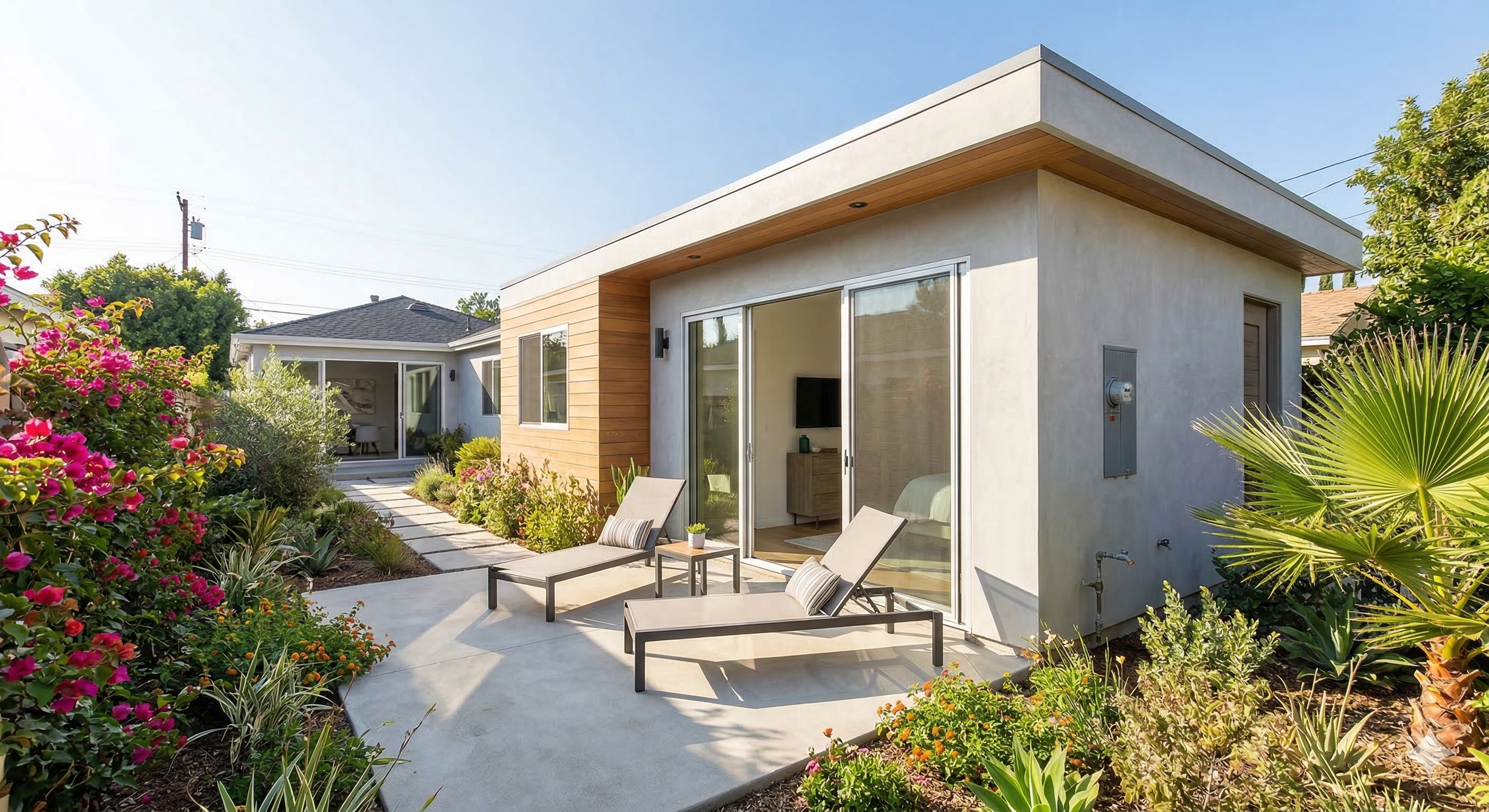
Unlike a standard interior remodel, building an ADU is equivalent to constructing a brand-new house on a smaller scale. Prices vary based on several complex factors:
- Home size and exterior surface area — dictates a large portion of materials required
- Permit and code requirements — set by the city of Los Angeles, these heavily influence the initial investment
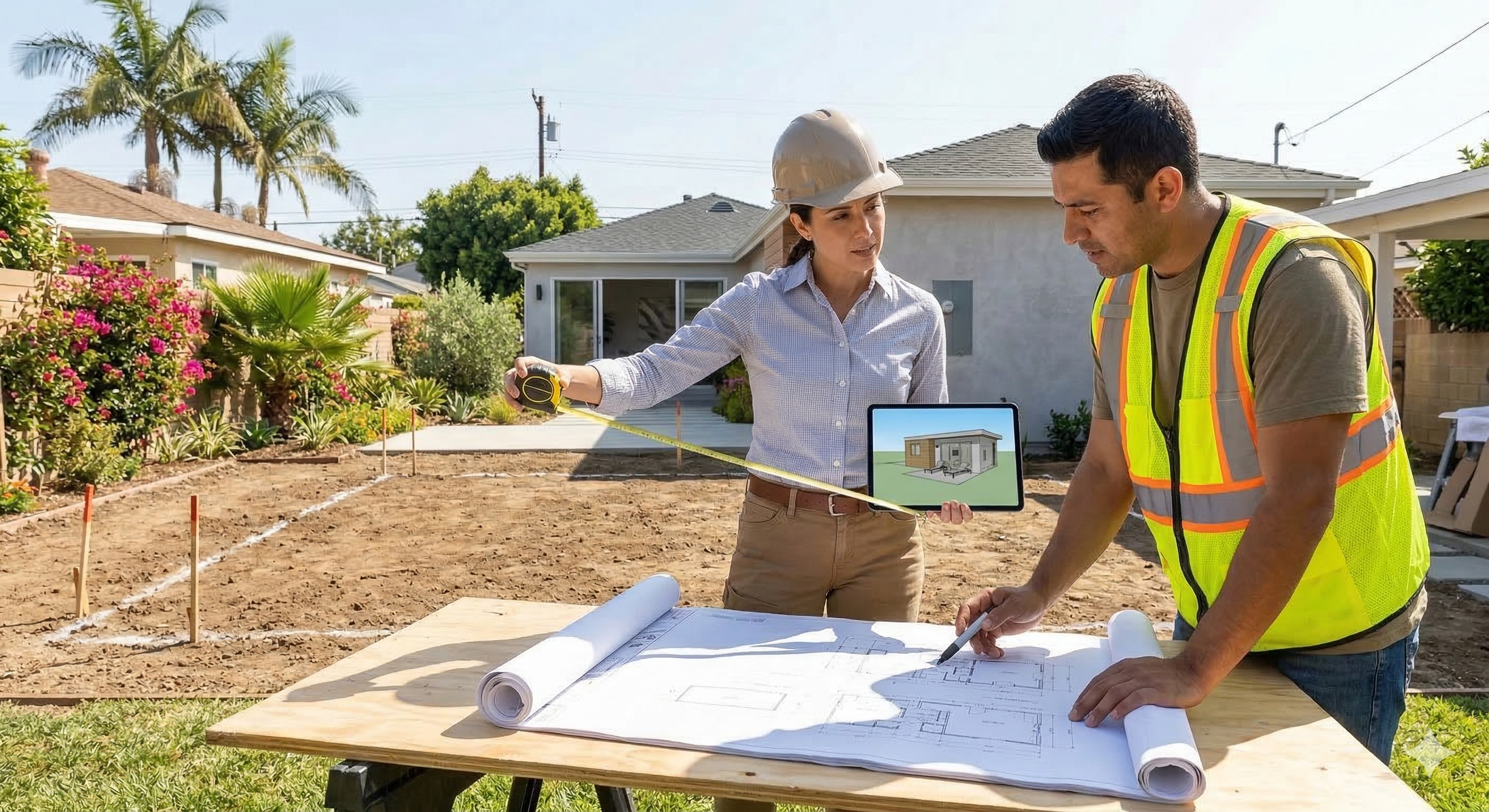
- Accessibility and labor complexity — building on a flat lot is significantly more cost-effective than on a hillside
California's ADU-friendly legislation has made the process significantly more accessible. Laws AB 2221 and SB 897 (effective January 2023) reduced setback requirements and allowed taller ADUs on more lot types. The City of Los Angeles also offers pre-approved standard ADU plans through LADBS, which can compress the permitting timeline from 6+ months down to as few as 4–6 weeks for eligible designs.
Important: This guide shows realistic Los Angeles ranges to help you understand the market. However, final pricing always requires an on-site evaluation to verify lot conditions, soil stability, and technical feasibility.
2. Local Cost Ranges
For a "turnkey" ADU project — including architecture, permits, construction, and move-in ready finishes — total costs generally fall into these tiers:
|
Level |
Cost Range |
What It Covers |
|---|---|---|
|
Low |
$90,000 – $120,000 |
Conversion of an existing structurally sound garage, standard materials, efficient layout |
|
Average |
$150,000 – $220,000 |
Ground-up detached ADU with full kitchen, bedroom, bathroom, and mid-range finishes |
|
High |
$250,000 – $350,000+ |
Maximum-size units (up to 1,200 sq ft), multiple bedrooms, custom design, luxury materials |
Cost per square foot for new construction: $300 to $550+, depending on build complexity and finish quality.
Rental income potential: A completed ADU in Los Angeles can generate $1,800–$3,500/month in rental income depending on size, location, and finishes. In high-demand neighborhoods like Silver Lake, Culver City, and the Westside, well-designed units regularly command the upper end of that range, with most investors projecting full cost recovery within 8–12 years.
3. The Most Common Project
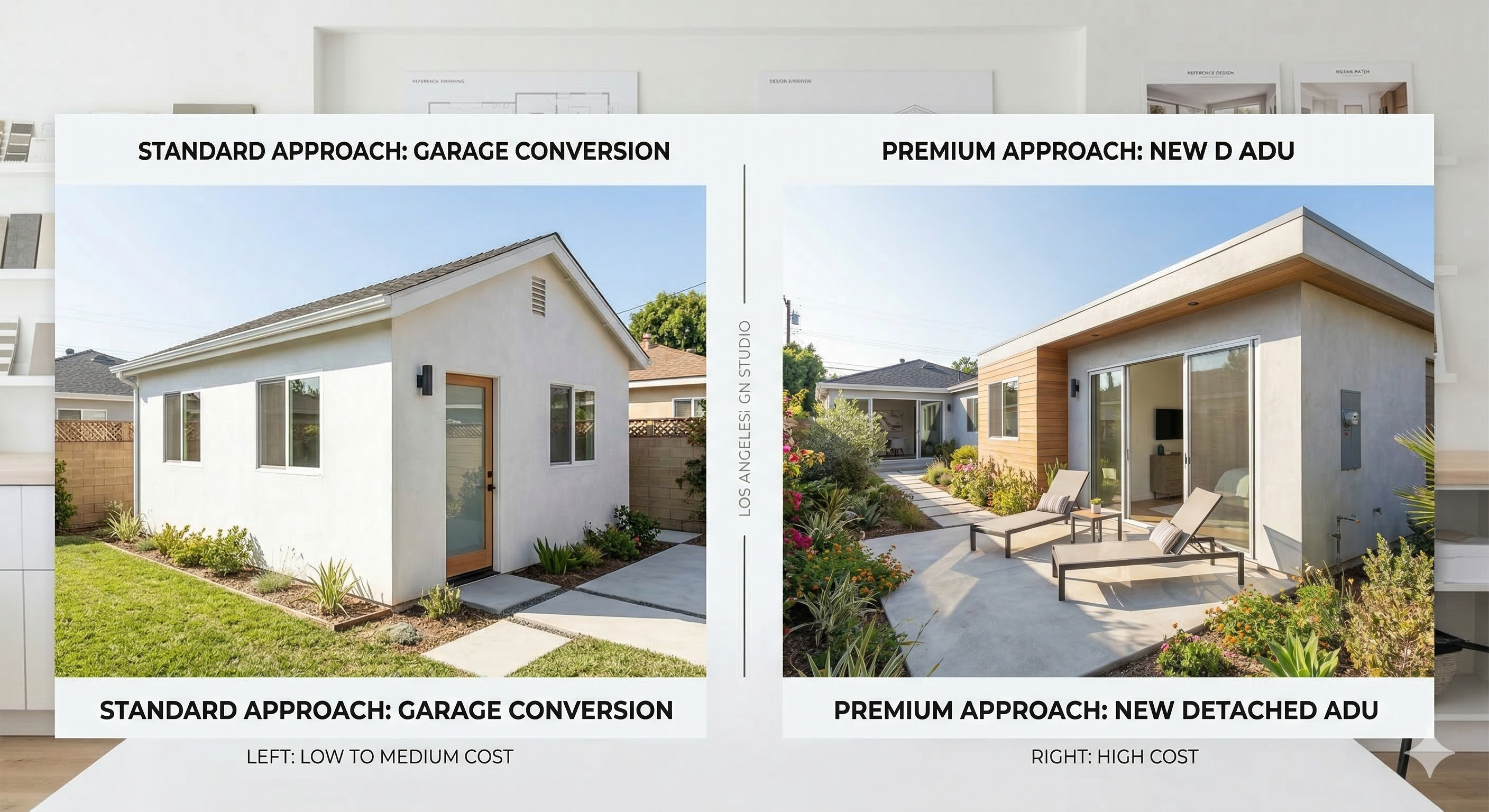
Los Angeles homeowners typically choose between two primary development paths:
|
Project Type |
Size |
Cost Range |
Best For |
|---|---|---|---|
|
Garage Conversion |
~400 sq ft |
$95,000 – $130,000 |
Fastest and most cost-effective — saves on foundation and framing |
|
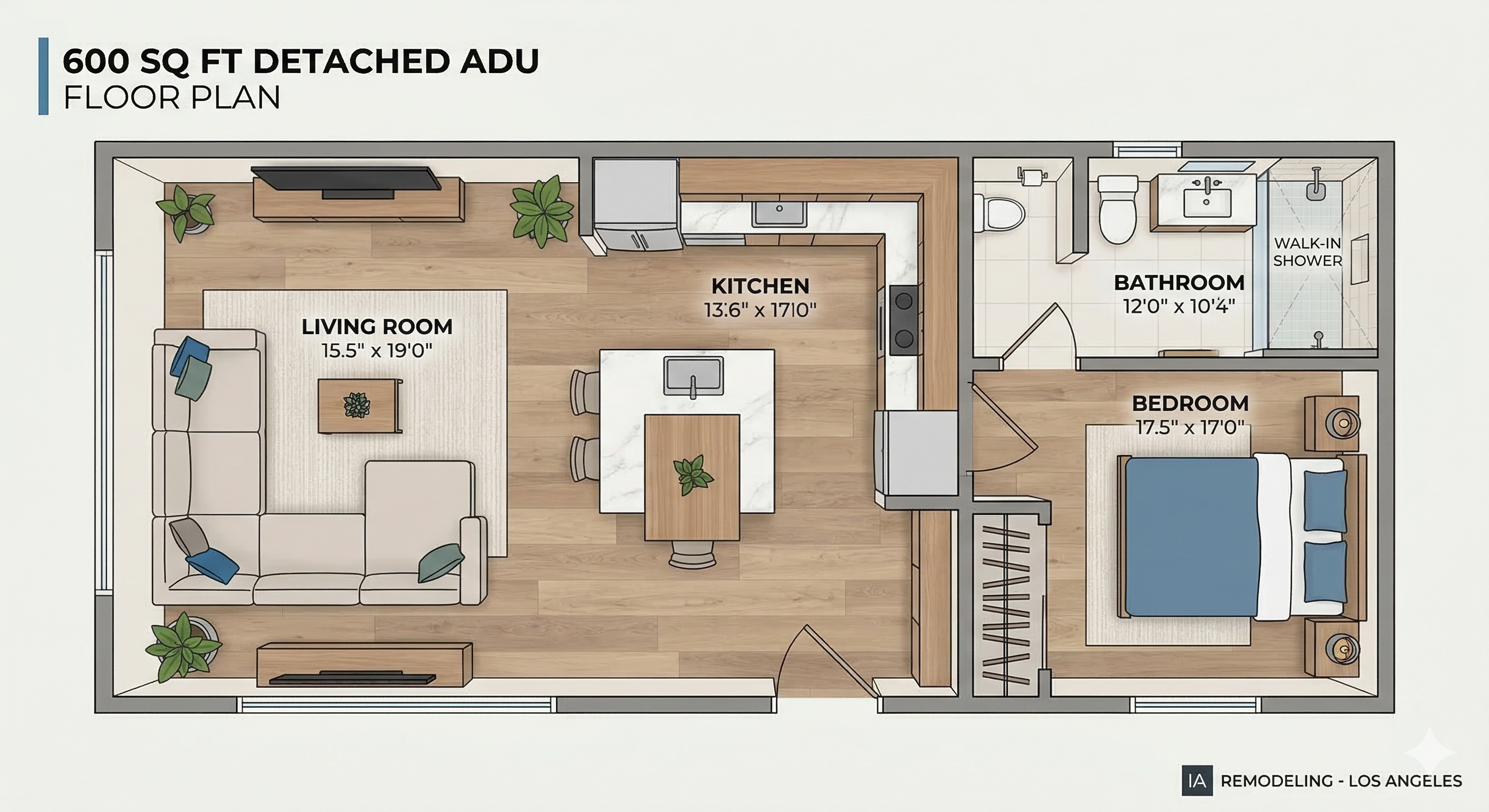
Detached ADU |
~600 sq ft |
$180,000 – $240,000 |
Complete privacy from the main house, ideal for premium rental units |
4. What Affects the Price
Higher Cost Projects
These elements drive the budget up significantly:
|
Element |
Impact |
|---|---|
|
Building entirely from scratch |
Requires excavation and a brand-new concrete foundation |
|
Sloped or hillside properties |
Needs soil engineering and costly retaining walls |
|
Long utility trenching runs |
Connecting sewer, water, and electrical across hardscape is expensive |
|
California Title 24 compliance |
New detached structures often require solar panel installation |
Lower Cost Approaches
How to optimize your investment:
|
Element |
Benefit |
|---|---|
|
Converting an existing garage |
Existing foundation and roof structure saves thousands |
|
Positioning close to main utility connections |
Minimizes trenching labor costs |
|
Simple architectural footprint (square or rectangle) |
Reduces framing complexity |
|
High-quality standard finishes (LVP flooring, prefab cabinets) |
Durable and attractive without luxury pricing |
Want a specific estimate for your ADU in Los Angeles?
Tell our agent about your project — it'll match you with a verified local pro in minutes.
Comments