

Is 2026 a Good Year to Remodel in the Bay Area? Costs, Timing, and What Homeowners Should Know
The honest answer is: yes — with conditions. Material prices have partially stabilized after the 2021–2022 inflation peak, contractor availability has improved, and Bay Area equity remains strong enough to fund significant projects. The conditions are tariff-driven material price pressure, HELOC rates still above 8%, and SF permit timelines that can add 4–6 months to any complex project.
At a Glance: Bay Area Remodeling 2026
|
|
|
|---|---|
|
Average cost |
$20,000 – $200,000+ |
|
Cost per sq ft |
$100 – $350 depending on scope |
|
ROI at resale |
60–88% (per Cost vs. Value Report 2025) |
|
Typical timeline |
3–12 months including permits |
|
Permit required |
Yes (scope-dependent) |
|
Local market factor |
~1.40x national baseline |
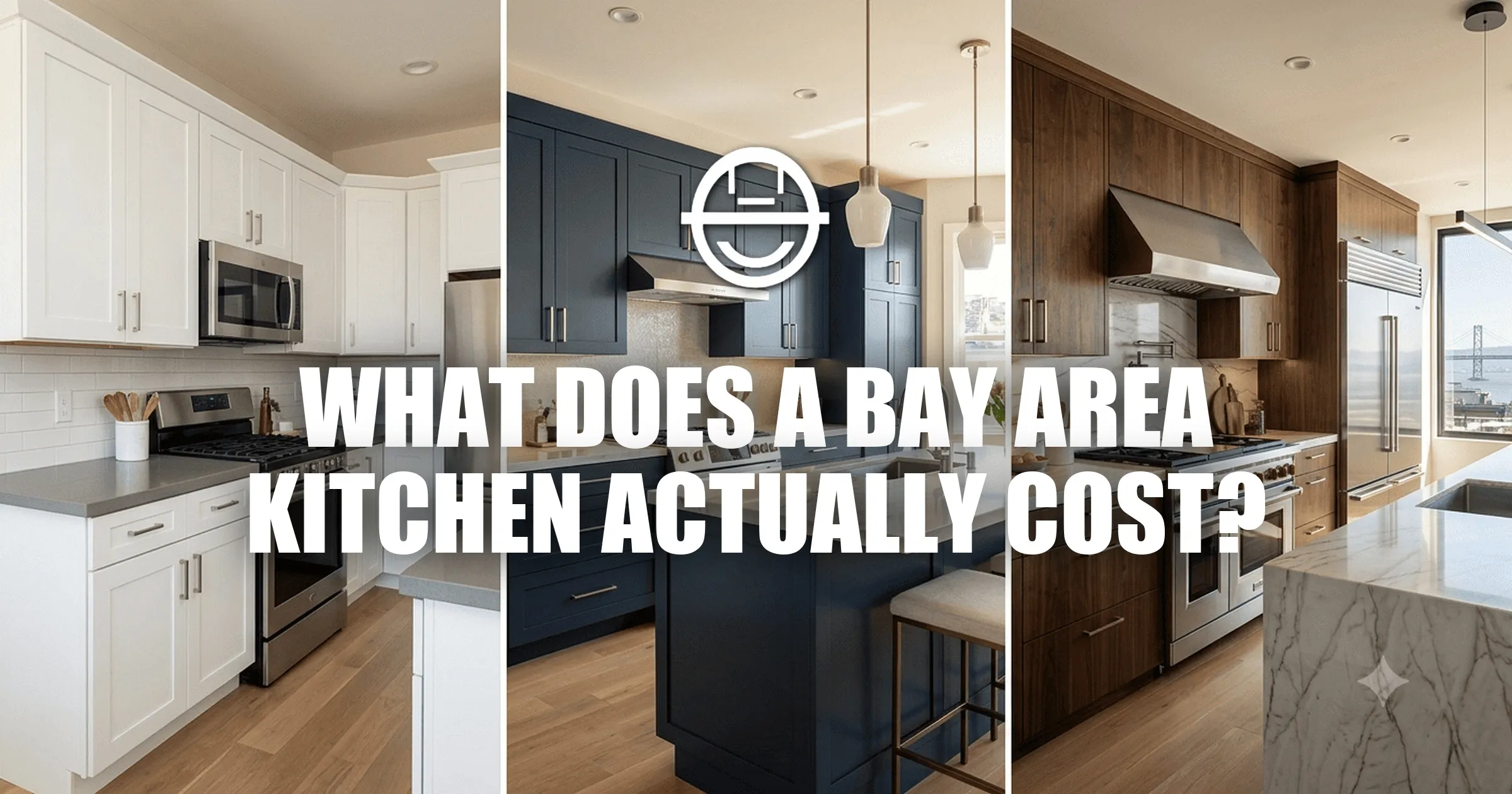
Quick benchmark: A mid-range kitchen remodel in the Bay Area runs $45,000–$75,000, with a 67.8% ROI at resale per the Cost vs. Value Report 2025.
Is 2026 Actually a Good Year to Remodel?
The question deserves a direct answer rather than a generic "it depends." Here's the 2026-specific picture for Bay Area homeowners:
The case for moving forward in 2026:
- Contractor availability has normalized. The 2021–2022 period saw 6–12 month backlogs for licensed contractors in the Bay Area. That backlog has largely cleared. Most licensed general contractors in San Jose, Oakland, and the Peninsula are booking 4–8 weeks out rather than 6+ months — which means you have more selection and more pricing leverage.
- Material prices partially stabilized. Lumber, drywall, and concrete prices dropped significantly from their 2022 peak. A mid-range kitchen that would have cost $80,000 in early 2022 is closer to $60,000–$70,000 in 2026 for the same scope.
- Bay Area equity is at record levels. The median Bay Area home value has recovered and grown since 2022. Homeowners who purchased before 2020 typically have $400,000–$800,000 in equity — making HELOC financing viable even at current rates.
- Pre-sale window is strong. Bay Area real estate remains one of the most competitive markets in the country. Pre-sale remodels in the $30,000–$80,000 range consistently produce price premiums that outpace the investment in the $1.2M+ home segment.
The case for caution:
- Tariff impact on specific materials. 2025 tariffs on steel, aluminum, and some imported tile and plumbing fixtures created 10–25% price increases on affected product categories. If your project relies heavily on imported materials — certain tile brands, European fixtures, specific appliances — budget for this premium or source domestically.
- HELOC rates remain elevated. Prime rate in 2026 keeps HELOC rates in the 8–10% range. A $100,000 HELOC at 9% costs $9,000/year in interest. Factor this into ROI calculations, particularly for projects that won't generate rental income.
- SF permit timelines haven't shortened. San Francisco DBI continues to process complex permits slowly — structural changes, plumbing relocation, ADUs, and electrical panel upgrades in SF can still take 4–8 months to permit. If you're in SF and your project has any structural component, start the permit process before finalizing your contractor.
Bottom line on timing: Homeowners planning kitchen remodels, bathroom upgrades, siding replacement, or window replacement have a genuine window in 2026. Homeowners in San Francisco planning structural or ADU projects need to account for permit lead time in their planning.
How Much Does a Remodel Cost in the Bay Area in 2026?
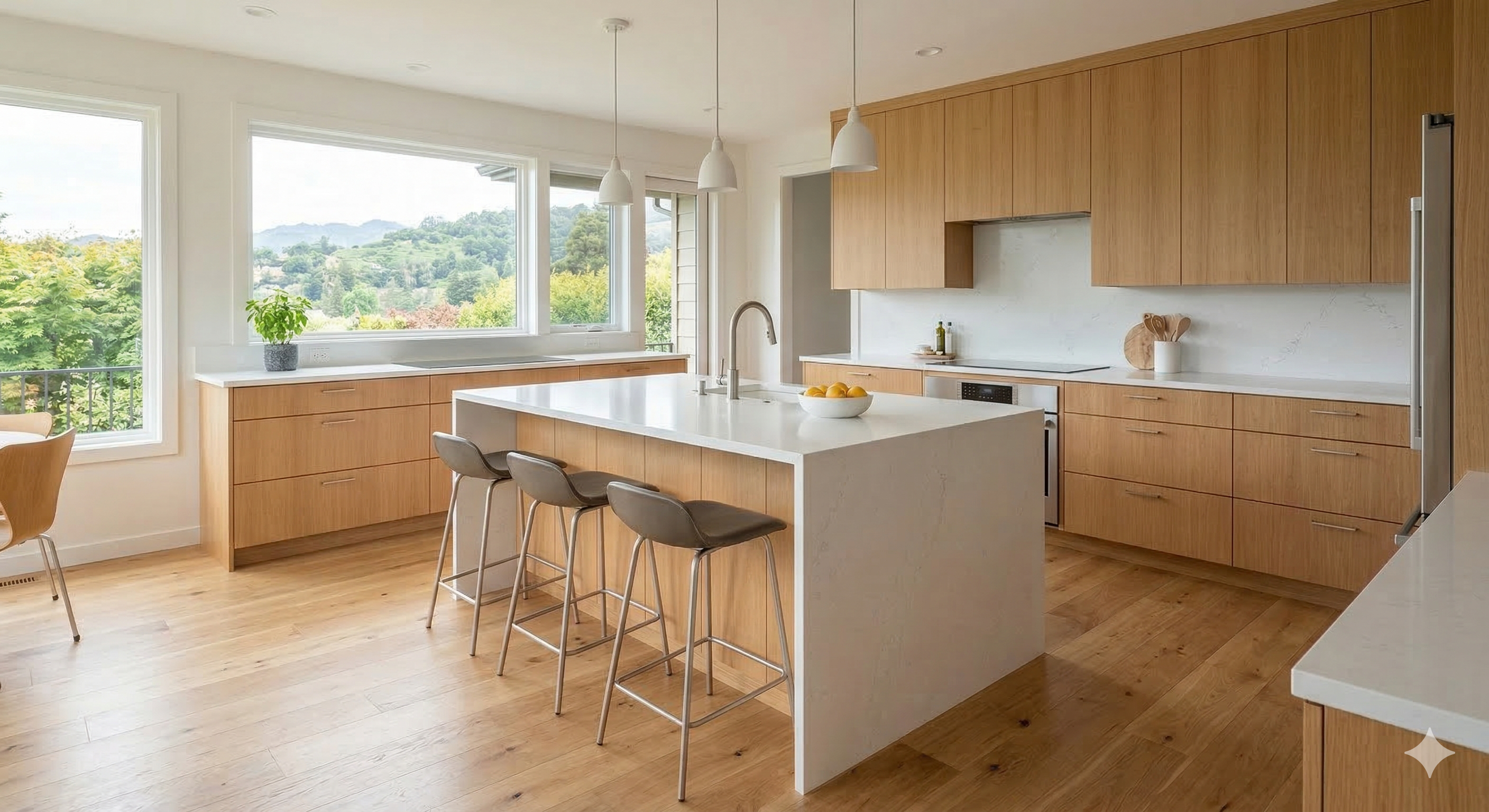
Remodeling costs in the Bay Area vary widely depending on scope, materials, and location within the region. The ~1.40x local market factor reflects labor rates, permit costs, and material delivery premiums specific to the region.
|
Project Type |
Cost Range |
Per Sq. Ft. |
|---|---|---|
|
Minor update (cosmetic refresh) |
$20,000 – $50,000 |
$50 – $100 |
|
Mid-range remodel |
$50,000 – $100,000 |
$100 – $200 |
|
Comprehensive renovation |
$100,000 – $200,000+ |
$200 – $350 |
According to the NAHB Remodeling Market Index, remodeling activity remains strong in 2026 nationally, with the Bay Area tracking above national averages due to high home values and equity-funded investment.
Permit cost reminder: Per SF Planning, permit fees alone range from $1,000–$5,000 for standard projects and can exceed that for structural work. Budget permits as a line item, not an afterthought.
Why Bay Area Remodeling Costs Are Higher
Three structural factors keep Bay Area remodeling costs above the national average, and none of them are changing in 2026:
Labor rates: Licensed contractors in the Bay Area charge $85–$150/hour for skilled trades. Union labor in San Francisco proper can run $120–$180/hour for plumbers and electricians. National average for the same work is $65–$100/hour.
Permit fees and processing: Bay Area cities charge permit fees as a percentage of project valuation. A $150,000 kitchen remodel in San Francisco generates $3,000–$6,000 in permit fees. In San Jose, the same project runs $1,500–$3,000. This is in addition to processing time.
Material delivery and margins: Bay Area contractors pay regional premiums on materials — roughly 8–15% above Midwest pricing — due to transportation costs and supplier concentration in the market.
Jurisdiction-by-Jurisdiction Permit Reality
Permit requirements and timelines vary significantly across the Bay Area. Planning around these differences is one of the most underused ways to control project timelines.
|
Jurisdiction |
Permit Processing (standard) |
Permit Processing (structural/ADU) |
Permit Cost Range |
|---|---|---|---|
|
San Francisco |
6–10 weeks |
4–8 months |
$1,500 – $6,000+ |
|
Oakland |
3–6 weeks |
2–4 months |
$800 – $3,000 |
|
San Jose |
2–4 weeks |
6–10 weeks |
$500 – $2,500 |
|
Berkeley |
4–8 weeks |
3–5 months |
$800 – $3,500 |
|
Marin County |
3–5 weeks |
2–4 months |
$600 – $2,500 |
SF Planning note: San Francisco's DBI has a Pre-Application Process (PAP) that can clarify requirements before permit submission — useful for projects on the boundary between "over the counter" approval and full review. Per SF Planning, this can prevent costly scope revisions mid-permit.
San Jose advantage: For Bay Area homeowners in the South Bay, San Jose's permit office processes most kitchen, bathroom, and structural remodels significantly faster than SF or Berkeley. If you're choosing between starting now and waiting for a SF project to permit, consider whether the project scope can be completed in a jurisdiction with faster processing.
Which Projects Have the Best ROI in the Bay Area in 2026?
According to the Cost vs. Value Report 2025, these projects consistently deliver the best return in the Pacific region (which tracks closely with Bay Area performance):
- Siding replacement: 88.4% ROI (fiber cement), 80.2% ROI (vinyl) — strongest ROI in the region
- Kitchen remodel: 67.8% ROI (mid-range)
- Bathroom remodel: 66.7% ROI
- Window replacement: 68.5% ROI (vinyl), 61.2% ROI (wood)
- Garage door replacement: 94.5% ROI nationally — one of the highest ROI projects in any market

What doesn't recover well in the Bay Area: Full custom kitchen remodels above $80,000, luxury bathroom additions, and pools (ongoing maintenance $3,000–$5,000/year plus insurance makes pools net-negative for most buyers). Spend on what moves appraisers and buyers, not what impresses at dinner parties.
How to Time Your Project for the Best Pricing and Availability
Seasonality in the Bay Area differs from the rest of the country. The Bay Area doesn't have harsh winters that slow construction — but it does have a rainy season (November through March) that affects exterior work. Per NOAA climate data, the Bay Area receives 80% of its annual rainfall between November and March.
Best timing for exterior projects (roofing, siding, windows, painting): April through October. Exterior projects that slip into November risk weather delays and potential water intrusion during construction.
Best timing for interior projects (kitchen, bathroom, structural): Year-round, with one caveat — January through March sees contractor slowdowns on new project starts, which means you can sometimes negotiate better pricing for interior projects that start in Q1.
How to use seasonality as a pricing lever: Contact contractors in November or December to schedule work for January–March. Many contractors offer 5–10% discounts to fill their winter calendar. For interior-only projects, this is a legitimate way to reduce costs without compromising quality.
The Equity Advantage
Bay Area homeowners who purchased before 2020 typically hold $400,000–$800,000 in home equity. This creates a financing environment that doesn't exist in most of the country: large projects can be funded without depleting savings.
Financing options by project size:
- $20,000–$50,000 (minor update): HELOC or personal loan. At $40,000 at 9% HELOC rate, interest cost is ~$3,600/year — recoverable if the project drives $40,000+ in value gain.
- $50,000–$150,000 (mid-range to comprehensive): HELOC or cash-out refinance. Consider whether refinancing your primary mortgage at current rates makes sense vs. a HELOC that doesn't touch your existing rate.
- $150,000+ (comprehensive or ADU): Construction-to-permanent loan or significant HELOC. At this scale, the ROI math should be modeled before committing — projects in this range need either a pre-sale plan or long-term rental income to justify the financing cost.
The Bottom Line
2026 is a reasonable year to remodel in the Bay Area for kitchen, bathroom, window, siding, and exterior projects. The 2021–2022 contractor backlog has cleared, material prices have partially normalized, and Bay Area equity provides strong financing leverage. The headwinds — tariff-affected material categories, elevated HELOC rates, and SF permit delays — are real but manageable with planning.
If you're planning to sell within 18–24 months, the window to complete a pre-sale remodel and capture the premium at listing is now. If you're staying long-term, the equity financing cost at 8–9% is the main variable to model against projected value gain.
IA Remodelings connects Bay Area homeowners with licensed contractors who provide written quotes breaking out labor, materials, and permits — and who schedule work to account for jurisdiction-specific permit timelines, so your project finishes on time.
Want a specific estimate for your remodeling project in Bay Area?
Tell our agent about your project — it'll match you with a verified local pro in minutes.

Comments