

Kitchen Remodel Mistakes Los Angeles Homeowners Make (And How to Avoid Them) in 2026
Kitchen remodels in Los Angeles fail most often not because of bad design — they fail because of decisions made in the planning phase that look harmless until they're expensive: the permit you skipped, the appliances you ordered before measurements were confirmed, the hidden asbestos nobody budgeted for.
At a Glance: Kitchen Remodel in LA 2026
|
|
|
|---|---|
|
Average cost |
$45,000 – $75,000 |
|
Cost per sq ft |
$200 – $500 |
|
ROI at resale |
60–80% |
|
Typical timeline |
3–8 weeks construction (plus permit lead time) |
|
Permit required |
Yes |
|
Local market factor |
~1.35x national baseline |
How Much Does a Kitchen Cost in LA in 2026?
The cost of a kitchen remodel in LA varies by scope:
- Basic updates (cabinet painting, countertop swap, hardware): $15,000 – $30,000
- Mid-range remodel (new cabinets, quartz countertops, appliance package, new flooring): $45,000 – $75,000
- High-end renovation (custom cabinets, structural layout change, premium appliances, full electrical and plumbing relocation): $75,000 – $150,000+
Quick benchmark: A mid-range kitchen remodel in LA runs approximately $60,000 — roughly $15,000 for cabinets, $10,000 for countertops, $12,000 for appliances, and the balance in labor, permits, and demo. Per the Cost vs. Value Report 2025, mid-range kitchen remodels in the Pacific region recover 67.8% of their cost at resale.
Mistake #1: Skipping the Permit
The most consequential mistake — and the most tempting one, because a contractor who offers to "skip the permit to save time and money" sounds efficient until the project gets red-tagged.
Per LADBS, most kitchen remodels require permits whenever they involve electrical, plumbing, gas, or structural work. What doesn't require a permit: painting, flooring (non-structural), and cabinet hardware changes. What does: moving a sink, relocating gas lines, adding or upgrading circuits, moving walls.
The real cost of skipping a permit: An unpermitted kitchen remodel must be disclosed at sale. Buyers' lenders and inspectors catch it. The resolution typically involves either retroactive permitting (which can require opening walls to expose the work) or a price reduction. The "savings" from skipping a permit routinely cost $10,000–$30,000 at closing.
Mistake #2: Choosing Cabinets Before Finalizing the Layout
Cabinet selection before layout lock-in is one of the most expensive sequencing mistakes in a kitchen remodel. Custom and semi-custom cabinets in the LA market have lead times of 8–16 weeks and are typically non-returnable once manufactured.
If you order cabinets based on an initial sketch and the layout changes — because the plumber says the drain can't move where you wanted, or the structural engineer requires a different beam location — you're looking at full reorder costs on a product you already paid for.
The correct sequence: finalize the kitchen layout, get it reviewed by your contractor and any required tradespeople (plumber, electrician), measure the exact space, then order cabinets. Buying materials before the layout is confirmed by the contractor who will actually build it is the single most common source of expensive delays.
Mistake #3: Underestimating Demo Surprises in LA Homes
Los Angeles has significant housing stock built between 1920 and 1985, and older homes in neighborhoods like Hancock Park, Silver Lake, Koreatown, and Los Feliz frequently contain hidden conditions that don't appear on any plan — but appear the moment you open a wall.
Asbestos: Homes built before 1980 may have vinyl floor tiles, pipe insulation, or drywall joint compound containing asbestos. Disturbing these materials during demo requires licensed abatement before work can continue — typically $1,500–$5,000 depending on what's found. A kitchen that tests positive for asbestos tile adds 1–2 weeks and that cost to the timeline before demo can even start.
Galvanized plumbing: Pre-1970 homes often have galvanized steel water supply lines that have corroded internally over decades. Opening walls to remodel the kitchen frequently reveals galvanized pipes at the end of their lifespan. Replacing the kitchen supply lines (and often the main line to the street) adds $3,000–$8,000.
Knob-and-tube wiring: Pre-1945 homes in Silver Lake, Echo Park, and parts of the Eastside still have knob-and-tube electrical systems in wall cavities. This wiring cannot be buried under insulation (a fire hazard per current code), which affects what can be done with the walls. Kitchen electrical in these homes frequently requires a panel upgrade and full circuit replacement, adding $5,000–$12,000.
Lead paint: Pre-1978 homes may have lead paint on surfaces being disturbed. Contractors working on these homes must follow EPA RRP (Renovation, Repair, and Painting) rules — which affects prep, cleanup, and disposal procedures and adds cost.
Build in a contingency before demo, not after: $5,000–$10,000 earmarked for discovered conditions is standard practice in LA kitchen remodels on pre-1980 homes.
Mistake #4: Buying Appliances Before the Contractor Measures
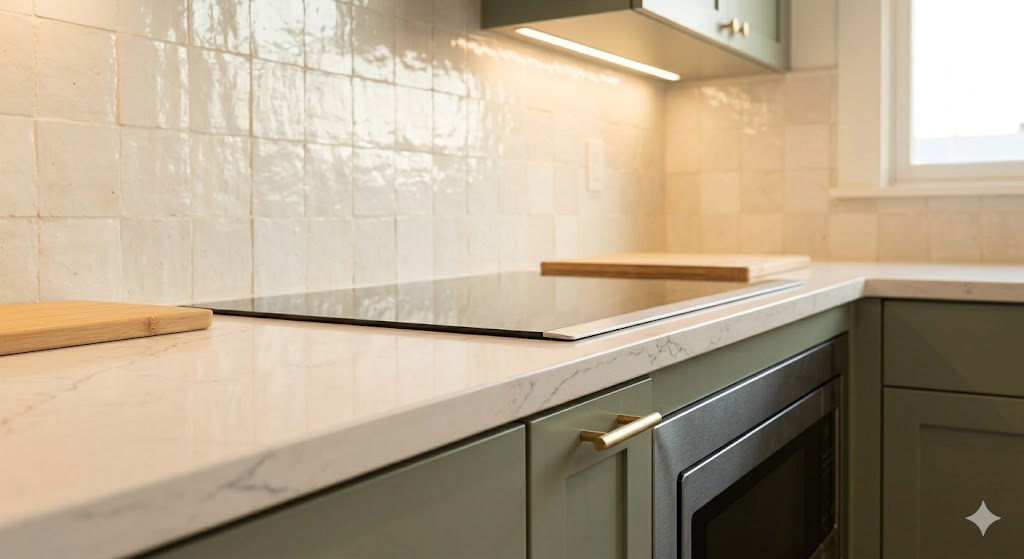
Appliance packages in the $4,000–$20,000 range are a significant line item in any kitchen remodel — and one that creates expensive problems when purchased before the contractor has confirmed final measurements and rough-in locations.
Common issues:
- Range selected for a 30" opening but the cabinet run was designed for 36"
- Refrigerator purchased that's 1" too wide for the cabinet enclosure (and 1" too tall for the overhead cabinet)
- Dishwasher that conflicts with the drain rough-in location
Most appliance retailers have 15–30 day return windows that expire well before installation day. Measure with your contractor before you purchase, confirm the rough-in locations, and get written confirmation of the dimensions in the contractor's shop drawings before ordering.
Mistake #5: Not Budgeting for the 15–20% Contingency
Every experienced remodeling contractor in LA will tell you the same thing: budget 15–20% of your project cost for contingency before the project starts, not after surprises emerge. That number exists because discovered conditions, scope additions, and material price shifts are not edge cases — they're the norm in a market with housing stock this old.
On a $60,000 kitchen remodel, a 15% contingency is $9,000. That sounds like a lot until you're standing in front of an open wall with galvanized pipes that need to be replaced before the plumber can rough in the new sink location.
Homeowners who don't build in contingency face a real choice mid-project: stop work (which creates its own costs), take on debt at whatever terms are available on short notice, or reduce scope in ways that compromise the original design.
Mistake #6: Hiring Based on the Lowest Bid
In a market where contractor quality varies as widely as it does in LA, the lowest bid is frequently the most expensive outcome. Low-bid contractors often omit items from their quote that other contractors include — permits, demo disposal, or specific material grades — making the comparison appear favorable when it isn't.
How to compare bids properly:
- Require all quotes to be itemized: labor, materials, permit, demo, and contingency as separate line items
- Confirm that each contractor will pull permits in their own name (not ask you to pull owner-builder permits)
- Verify the California Contractors State License Board (CSLB) license number at CSLB.ca.gov — a kitchen remodel requires a B (General Building) or C-5 (Framing) license at minimum
- Confirm workers' compensation and general liability insurance — get the certificates, not just a verbal confirmation
A bid that's 25% lower than the others usually means something is missing. Ask specifically what's not included before deciding.
Mistake #7: Not Understanding the LADBS Permit Timeline
LA homeowners frequently schedule contractor start dates without accounting for permit processing at LADBS — and are surprised when the permit takes longer than expected.
The timeline depends on what type of review your project requires:
Over-the-counter (OTC) permits: Non-structural kitchen remodels — new cabinets, new countertops, appliance replacement, minor electrical or plumbing updates that don't move the location of fixtures — often qualify for OTC review. These can be processed in 2–4 weeks.
Plan check: Projects that involve moving walls, relocating the sink or dishwasher to a new location, adding electrical circuits or upgrading the panel, or any structural change go to plan check. LADBS plan check for kitchen remodels currently takes 6–12 weeks depending on complexity and the examiner's caseload.
The sequencing risk: Signing a contract with a contractor and putting down a deposit before the permit is in hand creates pressure to start before approvals are secured. Schedule your permit application before you lock in a contractor start date — not simultaneously.
How to Plan a Kitchen Remodel in LA the Right Way
- Confirm your layout before ordering anything. Get contractor sign-off on the final layout, including plumber and electrician input on rough-in locations.
- Test for asbestos and lead before demo in any pre-1980 home. Licensed inspectors provide written reports that protect you and satisfy LADBS requirements.
- Apply for permits before contracting a start date. Know your permit timeline before you schedule.
- Order cabinets after the layout is confirmed and rough-ins are located. Not before.
- Confirm appliance dimensions against contractor shop drawings before purchasing.
- Verify contractor license at CSLB.ca.gov and confirm insurance certificates before signing.
- Build 15–20% contingency into your budget before the project starts.
- Communicate in writing. Scope changes agreed verbally and not documented in a change order create disputes at final payment.
The Bottom Line
The mistakes that derail LA kitchen remodels are preventable — but almost all of them happen in the planning and contracting phase, not during construction. The homeowners who avoid cost overruns are the ones who sequence correctly: permit before contractor start date, layout before materials, and contingency budget before demo.
IA Remodelings connects Los Angeles homeowners with licensed kitchen contractors who provide itemized written quotes, pull permits in their name, and can flag pre-demo testing requirements specific to your home's construction era.
Want a specific estimate for your kitchen in Los Angeles?
Tell our agent about your project — it'll match you with a verified local pro in minutes.



Comments