
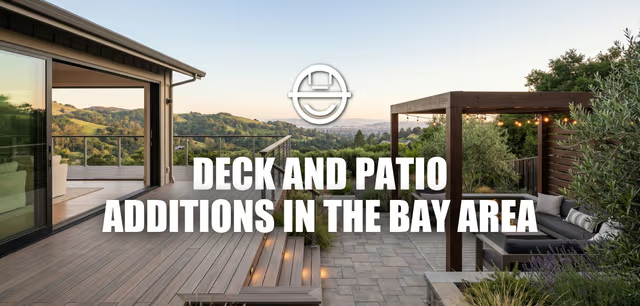
Deck and Patio Additions in the Bay Area: What It Costs, What Permits You Need, and What Adds Value in 2026
Bay Area deck costs run roughly 40% above the national average — the same labor premiums, permit fees, and material delivery costs that affect every other exterior project here. What makes decks different is that the Bay Area's outdoor-friendly climate and property values create stronger-than-average ROI, especially for covered structures that extend the season past the summer fog.
At a Glance: Decks in Bay Area 2026
|
|
|
|---|---|
|
Average cost |
$6,000 – $75,000+ |
|
Cost per sq ft |
$25 – $150 |
|
ROI at resale |
65–82% |
|
Typical timeline |
1–4 weeks |
|
Permit required |
Yes (scope-dependent) |
|
Local market factor |
~1.40x national baseline |
Quick benchmark: A 300 sq ft composite deck on a flat lot in the East Bay or Peninsula runs $18,000–$28,000 installed, including permit and footings. Hillside lots and SF proper add 20–40% to that range.
How Much Does a Deck Cost in the Bay Area in 2026?
Bay Area deck costs vary significantly by material, site conditions, and jurisdiction. The table below reflects installed costs including labor, permit, footings, and standard railing — not materials-only quotes.
|
Project type |
Cost range |
Cost per sq ft |
Notes |
|---|---|---|---|
|
Pressure-treated wood |
$6,000 – $15,000 |
$25 – $50 |
Entry point; requires sealing every 2–3 years |
|
Cedar or redwood |
$10,000 – $25,000 |
$40 – $75 |
Local species; naturally rot-resistant |
|
Composite (Trex/Fiberon) |
$18,000 – $40,000 |
$60 – $100 |
Low maintenance; higher upfront, lower lifetime cost |
|
Hardwood (Ipe, Teak) |
$22,000 – $45,000 |
$75 – $125 |
Maximum durability; difficult to source sustainably |
|
Multi-level or custom |
$35,000 – $75,000+ |
$100 – $150 |
Hillside sites, structural complexity, roofed structures |
Key cost drivers: Material choice accounts for 40–60% of total cost; labor for 30–40%; permits and inspections for 5–10%. Bay Area labor rates for licensed deck contractors run $85–$130/hour, above the national average due to the same market dynamics that affect all skilled trades here.
Wood vs. Composite vs. Hardwood: What Holds Up in Bay Area Conditions
The Bay Area's climate is more demanding for decking than it appears. Coastal fog, marine layer moisture, and salt air in neighborhoods within 3–5 miles of the bay create conditions that accelerate the decay of untreated wood. Here's how each material performs:
Pressure-treated wood: Affordable entry point, but requires sealing every 2–3 years and is vulnerable to cupping and splitting in the wet/dry cycling typical of Bay Area winters versus dry summers. Lifespan without consistent maintenance: 10–15 years in coastal microclimates.
Cedar and redwood: Naturally resistant to rot and insects, making them the traditional Bay Area choice. Redwood sourced from sustainable California mills performs particularly well in fog-belt neighborhoods. Requires oiling or staining every 3–5 years. Lifespan: 20–30 years with moderate maintenance.
Composite (Trex, Fiberon, TimberTech): The most moisture-resistant option and the fastest-growing category in Bay Area deck projects. No sealing required, resists mold and mildew (relevant in Oakland Hills, Marin), and holds color longer in coastal UV exposure. Higher upfront cost is typically offset by near-zero maintenance over 25–30 year lifespan.
Hardwood (Ipe, Teak, Cumaru): Maximum density and durability, but sourcing sustainable hardwood is increasingly difficult and expensive. Best for homeowners who want a premium aesthetic and will commit to annual oiling. Not recommended for shaded decks where mold growth can stain the surface.
For Bay Area coastal homes (within 1 mile of the bay or ocean): composite or hardwood. For inland East Bay and Peninsula: cedar/redwood or composite based on budget.
Permit Requirements by Bay Area Jurisdiction
Permit requirements vary significantly across the Bay Area. As a general rule, California Building Code requires permits for any deck attached to the house and any deck more than 30 inches above grade — but thresholds, fees, and processing times differ by city.
|
Jurisdiction |
Permit threshold |
Processing time |
Estimated permit cost |
|---|---|---|---|
|
San Francisco |
Any deck attached to house or over 200 sq ft |
6–12 weeks |
$800 – $3,000+ |
|
Oakland |
Attached or over 30" above grade |
3–6 weeks |
$500 – $2,000 |
|
Berkeley |
Attached or over 30" above grade |
4–8 weeks |
$500 – $1,800 |
|
San Jose |
Attached or over 30" above grade |
2–4 weeks |
$300 – $1,500 |
|
Marin County |
Varies by city; most require permit for attached decks |
3–6 weeks |
$400 – $1,500 |
Per SF Planning, San Francisco's permit process for decks with structural elements (hillside sites, roofed structures) can require full plan review rather than over-the-counter approval, significantly extending the timeline. San Jose processes most standard deck permits faster than any other Bay Area city — a meaningful difference if your project has a seasonal deadline.
Unpermitted decks: In the Bay Area, unpermitted decks must be disclosed at sale and can require demolition or retroactive permitting, which often costs more than the original permit would have. Licensed contractors pull permits — walk away from any contractor who suggests skipping the permit to save money.
Hillside Homes in Oakland and Berkeley: Extra Structural Requirements
Hillside lots in Oakland and Berkeley (and parts of Marin, Orinda, and Lafayette) add structural complexity that flat-lot cost estimates don't capture. The key differences:
Foundation systems: Flat-lot decks use standard concrete footings. Hillside decks often require engineered pier foundations or helical anchors that extend to stable soil below the slope, adding $3,000–$10,000+ to footing costs alone.
Lateral bracing: Sloped sites need additional lateral bracing to resist downhill movement — an engineering requirement that adds both cost and plan-check time.
Wildfire clearance: Many East Bay Hills and Marin hillside properties are in Very High Fire Hazard Severity Zones. Wood decks in these areas must use fire-resistant decking material or maintain defensible space clearances. Composite decking generally performs better in ember exposure tests than standard wood.
Budget expectation for hillside decks: Add 25–40% to flat-lot estimates before site evaluation. A composite deck that would cost $22,000 on a flat Peninsula lot might run $30,000–$35,000 on an Oakland Hills hillside site.
What Actually Adds Value in 2026: Bay Area Outdoor Living
According to the NAHB Remodeling Market Index, outdoor living space is consistently among the most requested features in buyer surveys. In the Bay Area, where usable outdoor space is a genuine premium — particularly in SF, Berkeley, and dense Peninsula cities — a well-designed deck addresses a real inventory gap.
ROI context: The Cost vs. Value Report benchmarks deck additions in the Pacific region at 65–82% cost recovery at resale. In the $1.5M+ Bay Area home segment, a deck that extends usable living space can produce outsized returns at listing because competing homes at that price point often lack it.
What makes a Bay Area deck perform better at resale:
- Covered or pergola structures: The Bay Area's notorious summer fog (June-September marine layer) means an uncovered deck in many neighborhoods sits unused for a third of the year. A pergola or roofed structure with ceiling heat extends usable months — and covered outdoor dining space photographs well for listings.
- Built-in heaters or fire features: Infrared ceiling heaters ($800–$2,500 per unit installed) and propane or natural gas fire pits extend the deck season year-round. Fire pits require a gas line connection or propane setup — factor in that cost.
- Integrated lighting and electrical: Deck lighting (step lights, string light circuits, outlet boxes) adds minimal cost during construction and meaningful functionality and visual appeal.
- Low-maintenance materials: Buyers in the Bay Area market increasingly prefer composite decking specifically because they want outdoor space without weekend maintenance.
.webp)
HOA Approval in Bay Area Developments
Condos, townhouses, and homes in master-planned communities typically require HOA approval before pulling a city permit. The process involves submitting plans for review — timelines range from 2 weeks to 3 months depending on the HOA. Common restrictions include approved materials lists, color requirements, and setback rules from property lines.
Getting HOA approval and city permit approval are separate processes. Starting with the HOA is safer — a city permit doesn't override HOA CC&Rs, and discovering a CC&R conflict after materials are ordered is expensive.
The Bottom Line
For Bay Area homeowners, decks are one of the stronger outdoor investment categories — more so than in markets where outdoor season is shorter. The 65–82% ROI benchmark reflects a market that genuinely values outdoor living space, and covered structures with heating push usability and resale appeal higher than the national average would suggest.
The planning sequence that works: determine your HOA requirements first, then check your jurisdiction's permit threshold, then get written quotes from licensed contractors that separate material, labor, permit, and footing costs as distinct line items.
IA Remodelings connects Bay Area homeowners with licensed deck contractors who provide itemized written quotes and handle permits — including the jurisdiction-specific requirements in hillside neighborhoods and SF's longer review timeline.
Want a specific estimate for your decks in Bay Area?
Tell our agent about your project — it'll match you with a verified local pro in minutes.

Comments